More About This Card
Tequila, a spirit that has become synonymous with Mexican culture and celebration, is crafted from the heart of the agave plant, known as the piña. This fascinating process begins with the cultivation of the blue agave plant, which thrives in the rich volcanic soils of the Jalisco region in Mexico. The journey from plant to bottle is a testament to the dedication and craftsmanship that has been passed down through generations.
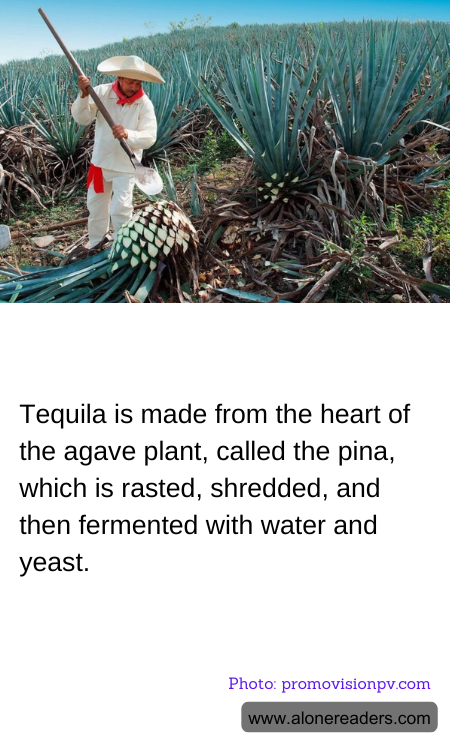
The heart of the agave, the piña, is the centerpiece of tequila production. Resembling a large pineapple, the piña is harvested by skilled workers known as jimadores. These experts use a sharp tool called a coa to carefully remove the spiky leaves, revealing the succulent core. The piñas are then transported to the distillery, where they undergo a transformation that unlocks their sweet potential.
Once at the distillery, the piñas are roasted in large ovens or autoclaves. This roasting process is crucial as it converts the complex carbohydrates within the agave into fermentable sugars. The heat caramelizes the sugars, imparting a rich, sweet flavor that is essential to the character of the final product. After roasting, the piñas are shredded or crushed to extract the sweet juice, known as aguamiel, which is the foundation of tequila.
The next step in the journey is fermentation. The aguamiel is mixed with water and yeast in large fermentation tanks. The yeast plays a vital role, consuming the sugars and converting them into alcohol. This process can take several days, during which the mixture bubbles and froths as it transforms. The result is a low-alcohol liquid known as mosto, which is then distilled to increase its alcohol content and refine its flavors.
Distillation is a critical phase, typically occurring twice to ensure purity and quality. The first distillation, known as the "destrozamiento," produces a cloudy liquid called ordinario. The second distillation, or "rectification," refines the ordinario into clear, potent tequila. The spirit is then either bottled immediately as blanco or silver tequila or aged in barrels to develop deeper flavors, resulting in reposado, añejo, or extra añejo varieties.
Tequila's journey from the heart of the agave plant to a bottle on the shelf is a remarkable process that combines tradition, science, and artistry. Each step is carefully controlled to ensure the highest quality, resulting in a spirit that is enjoyed worldwide. Whether sipped slowly or mixed into a cocktail, tequila offers a taste of Mexico's rich heritage and the enduring legacy of the agave plant.