More About This Card
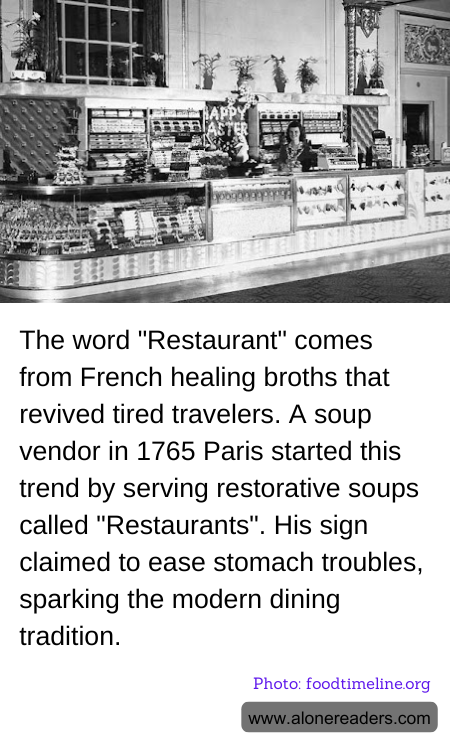
The word "restaurant" is so ingrained in our daily vocabulary that we seldom pause to consider its origins. Yet, this commonplace term has a fascinating history that dates back to 18th century France, where it was born out of a simple yet profound concept: the healing power of food. The story begins in 1765 Paris, where a soup vendor named Boulanger set up shop with a unique offering that would eventually revolutionize the way people dine.
Boulanger's establishment was not a restaurant in the modern sense, but rather a small eatery that specialized in serving "restaurants," a term derived from the French word "restaurer," meaning "to restore." These were not the elaborate meals we associate with French cuisine today, but rather simple, nourishing broths designed to rejuvenate weary travelers and ease their stomach troubles. Boulanger's sign boldly proclaimed the restorative properties of his soups, promising relief to those who were tired or unwell.
The concept of serving food specifically designed to restore health was not entirely new. However, Boulanger's approach was innovative in that he offered these healing broths to the general public, rather than limiting them to the sick or infirm. His soups were accessible, affordable, and most importantly, effective. Word quickly spread about the miraculous properties of these "restaurants," and soon, Boulanger's shop became a popular destination for both locals and visitors to Paris.
This simple yet effective idea caught on, and soon other vendors began to emulate Boulanger's model. The concept of a place where one could go to be restored through food resonated with the public, and the term "restaurant" gradually evolved to encompass a wider variety of dining establishments. By the late 18th century, the idea of a restaurant as a place where one could enjoy a meal outside the home had taken root, paving the way for the diverse and vibrant dining culture we enjoy today.
The legacy of Boulanger's restorative soups is evident in the modern restaurant industry, which continues to emphasize the importance of nourishment and hospitality. While today's restaurants offer a wide array of cuisines and experiences, the core principle remains the same: to provide a space where people can come together to enjoy good food and good company, and leave feeling restored and satisfied.
In essence, the humble beginnings of the restaurant as a purveyor of healing broths highlight the enduring connection between food and well-being. It serves as a reminder that at its heart, dining is not just about sustenance, but about rejuvenation and community. As we sit down to our next meal at a restaurant, we can appreciate the rich history behind the word and the tradition of hospitality that continues to thrive centuries after Boulanger first served his restorative soups in Paris.