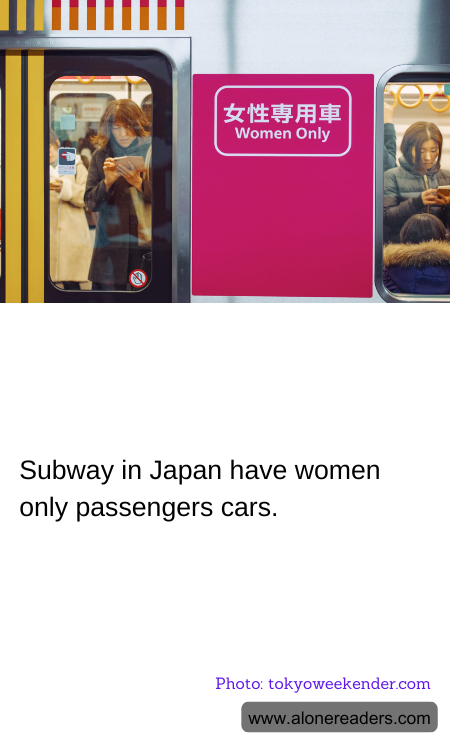
In Japan, a country renowned for its efficient and punctual public transportation system, the introduction of women-only passenger cars on subways has been a significant step towards ensuring safety and comfort for female commuters. This initiative, which began in the early 2000s, was primarily a response to increasing reports of groping and harassment on crowded trains, a problem that had become a significant concern for many women traveling during peak hours.
The concept of women-only cars is straightforward: during specific times, usually during the morning and evening rush hours, certain cars on a train are designated exclusively for female passengers. These cars are clearly marked with signs and announcements, making it easy for passengers to identify them. The initiative has been widely implemented across major cities in Japan, including Tokyo, Osaka, and Nagoya, where the volume of daily commuters is exceptionally high.
The introduction of women-only cars has been met with mixed reactions. For many women, these cars provide a much-needed sense of security and peace of mind. The ability to travel without the fear of unwanted attention or harassment allows them to focus on their journey, whether it be heading to work, school, or returning home. This sense of safety is particularly important in a society where public transportation is a daily necessity for millions.
However, the initiative has also sparked discussions about gender equality and the root causes of harassment. Critics argue that while women-only cars offer a temporary solution, they do not address the underlying issues of gender-based violence and societal attitudes towards women. Some suggest that more comprehensive measures, such as stricter enforcement of laws against harassment and public awareness campaigns, are necessary to create a safer environment for all passengers, regardless of gender.
Despite these debates, the popularity of women-only cars continues to grow, with many women expressing their appreciation for the option. The initiative has also inspired similar measures in other countries facing similar issues, highlighting the global relevance of creating safe spaces for women in public areas.
In conclusion, women-only passenger cars on subways in Japan represent a proactive approach to addressing the safety concerns of female commuters. While they are not a panacea for the broader issues of gender-based harassment, they provide an immediate and practical solution that has been embraced by many. As discussions about gender equality and safety continue to evolve, the experience of Japan's women-only cars offers valuable insights into how public transportation systems can adapt to meet the needs of all passengers.
