More About This Card
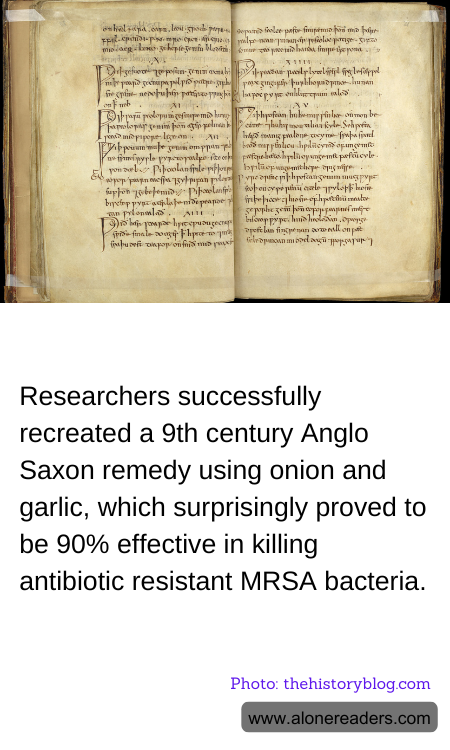
In a remarkable intersection of history and modern science, researchers have successfully recreated a 9th-century Anglo-Saxon remedy that has shown surprising efficacy against antibiotic-resistant MRSA bacteria. This ancient concoction, originally documented in a medieval medical text known as "Bald's Leechbook," combines simple ingredients like onion and garlic, yet it has demonstrated an impressive 90% effectiveness in killing MRSA, a notorious superbug that poses a significant challenge to contemporary medicine.
The journey to rediscover this ancient remedy began when researchers at the University of Nottingham and their collaborators at Texas Tech University delved into historical texts to explore potential solutions to the growing problem of antibiotic resistance. Bald's Leechbook, a compendium of medical knowledge from the 9th century, provided the recipe for what was originally intended as an eye salve. The ingredients, including onion, garlic, wine, and cow bile, were combined and left to steep for nine days before being strained and applied.
The researchers meticulously followed the ancient instructions, ensuring that the preparation process was as authentic as possible. The results were astonishing. When tested in laboratory conditions, the recreated remedy was able to kill up to 90% of MRSA bacteria, a pathogen that has become increasingly resistant to conventional antibiotics. This finding has sparked excitement and curiosity among scientists and medical professionals, as it suggests that historical knowledge may hold untapped potential for addressing modern health challenges.
The success of this medieval remedy highlights the importance of exploring historical texts and traditional medicine for potential solutions to contemporary problems. While modern medicine has made incredible advancements, the rise of antibiotic-resistant bacteria is a growing concern that requires innovative approaches. The discovery that a simple combination of natural ingredients can effectively combat such a formidable pathogen is a testament to the wisdom of ancient healers and the potential of nature-based remedies.
This breakthrough also underscores the need for further research into the mechanisms by which these ingredients work together to combat bacteria. Understanding how the components of this ancient remedy interact could lead to the development of new treatments that harness the power of natural compounds. Moreover, it opens the door to exploring other historical remedies that may have been overlooked or dismissed in the past.
As researchers continue to investigate the potential of this Anglo-Saxon remedy, it serves as a reminder of the value of interdisciplinary collaboration and the importance of keeping an open mind when it comes to scientific discovery. The past may hold keys to solving some of today's most pressing medical challenges, and this successful recreation of a 9th-century treatment is a promising step in that direction.