More About This Card
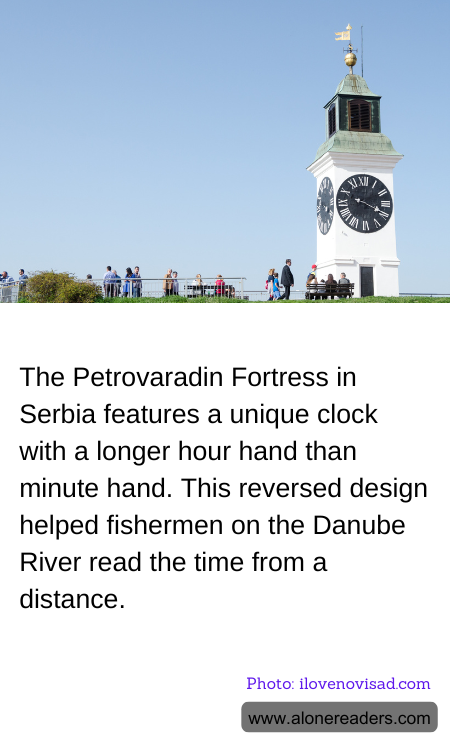
Nestled on the banks of the Danube River in the city of Novi Sad, Serbia, the Petrovaradin Fortress stands as a testament to centuries of history, architectural ingenuity, and cultural significance. Among its many fascinating features, one stands out for its peculiar design and practical purpose: the fortress's clock tower, which boasts a clock with a longer hour hand than minute hand. This unique design, while initially puzzling to visitors, holds a practical purpose rooted in the daily lives of the region's fishermen.
The Petrovaradin Fortress, often referred to as the "Gibraltar on the Danube," has been a strategic military stronghold since its construction in the 17th century. Over time, it has evolved into a cultural landmark, drawing tourists from around the world. The fortress's clock tower, perched high above the river, is one of its most iconic features. Unlike traditional clocks where the minute hand is longer for precision, the clock at Petrovaradin reverses this convention. The hour hand is longer, allowing it to be easily visible from a distance.
This unconventional design was not a whimsical choice but a thoughtful adaptation to the needs of the local community. The Danube River, flowing majestically past the fortress, has long been a vital artery for trade, travel, and sustenance. Fishermen, who relied on the river for their livelihood, needed a way to tell the time from their boats. The longer hour hand allowed them to discern the hour from afar, even in less than ideal weather conditions. This practical solution ensured that they could manage their time effectively, whether for fishing schedules or navigating the river's currents.
Beyond its functional purpose, the clock at Petrovaradin Fortress has become a symbol of the region's rich history and the ingenuity of its people. It serves as a reminder of how communities adapt their environment to meet their needs, blending practicality with tradition. The clock's design also invites visitors to reflect on the passage of time and the enduring legacy of those who have lived and worked along the Danube.
Today, the Petrovaradin Fortress is not only a historical monument but also a vibrant cultural hub. It hosts the annual EXIT music festival, attracting thousands of visitors who come to enjoy the music and explore the fortress's many attractions. As they wander through its ancient corridors and gaze upon the unique clock tower, they are reminded of the fortress's storied past and its ongoing role in the community.
In a world where digital timekeeping devices are ubiquitous, the clock at Petrovaradin Fortress stands as a charming anachronism, a piece of living history that continues to serve its purpose while captivating the imagination of all who see it. Its reversed design is a testament to the ingenuity of those who came before, ensuring that the rhythms of life along the Danube could be measured with clarity and precision.