More About This Card
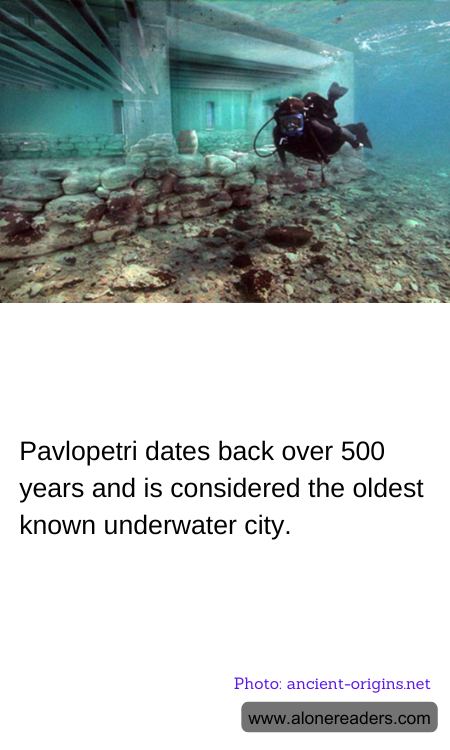
Nestled beneath the azure waters off the coast of southern Laconia in Greece lies Pavlopetri, a submerged city that has captivated historians and archaeologists alike. This ancient city, believed to date back over 5,000 years, holds the title of the oldest known underwater city, offering a unique glimpse into the lives of its ancient inhabitants and the mysteries of early urban development.
Discovered in 1967 by Dr. Nicholas Flemming, Pavlopetri has since been the subject of extensive research and exploration. The city is remarkably well-preserved, with its layout still clearly visible beneath the waves. Streets, buildings, courtyards, and even tombs can be discerned, providing a rare opportunity to study a Bronze Age settlement in situ. The site covers approximately 9 acres, and its structures are thought to have been constructed around 2800 BC, during the early Mycenaean period, making it a significant archaeological treasure.
The significance of Pavlopetri extends beyond its age. It offers invaluable insights into the urban planning and architecture of ancient civilizations. The city’s design reflects a sophisticated understanding of spatial organization, with evidence of residential areas, workshops, and religious structures. This complexity suggests that its inhabitants were not only skilled architects but also engaged in various trades and cultural practices. The presence of large storage jars, known as pithoi, indicates that the city was involved in trade, possibly exporting goods such as olive oil and wine.
The reasons behind Pavlopetri’s submersion remain a topic of debate among scholars. Some suggest that a series of earthquakes, common in the region, may have caused the land to sink, while others propose that rising sea levels gradually engulfed the city. Regardless of the cause, the preservation of Pavlopetri beneath the sea has protected it from the ravages of time and human interference, allowing modern technology to uncover its secrets.
In recent years, advancements in underwater archaeology have facilitated more detailed studies of Pavlopetri. Techniques such as 3D mapping and digital reconstruction have enabled researchers to create detailed models of the city, bringing its ancient streets and structures to life for a global audience. These efforts not only enhance our understanding of the site but also help to preserve its legacy for future generations.
Pavlopetri stands as a testament to the ingenuity and resilience of ancient civilizations. Its discovery and ongoing study continue to inspire awe and curiosity, reminding us of the rich tapestry of human history that lies beneath the surface of our world. As we delve deeper into its mysteries, Pavlopetri offers a poignant reminder of the enduring connection between past and present, and the stories that remain hidden beneath the waves, waiting to be told.