More About This Card
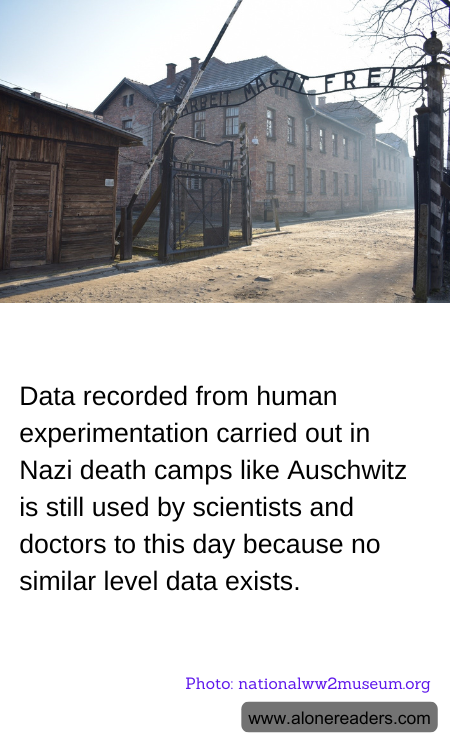
The ethical implications of using data obtained from human experimentation during the Holocaust remain a deeply contentious issue. During World War II, Nazi doctors conducted horrific experiments on prisoners in concentration camps like Auschwitz. These experiments were often brutal and inhumane, violating the fundamental principles of medical ethics. Despite the atrocities committed, some of the data collected during these experiments is still referenced by scientists and doctors today, primarily because it represents unique information that cannot be replicated under ethical research standards.
The experiments conducted by Nazi doctors were varied and often aimed at furthering the war efforts or proving pseudoscientific racial theories. Subjects were exposed to extreme conditions, such as freezing temperatures, high altitudes, and infectious diseases, to study the human body's limits and responses. The data collected from these experiments, although obtained through unethical means, sometimes provides insights into human physiology that are difficult to acquire otherwise.
The use of this data poses a moral dilemma. On one hand, the information could potentially contribute to scientific and medical advancements, potentially saving lives. On the other hand, using this data could be seen as legitimizing the methods by which it was obtained, thereby dishonoring the memory of the victims who suffered and died during these experiments. Many argue that the data should be discarded entirely, as it is tainted by the circumstances of its collection.
Despite these concerns, some researchers argue that ignoring the data would be a disservice to the victims, as it could be used to prevent future suffering. For instance, data on hypothermia obtained from Nazi experiments has been referenced in developing treatments for hypothermia victims. However, the scientific community remains divided on whether the potential benefits outweigh the ethical costs.
The debate over the use of Nazi experimentation data highlights the importance of ethical standards in research. It serves as a reminder of the atrocities that can occur when science is conducted without regard for human rights and dignity. As we continue to advance in fields like medicine and science, it is crucial to ensure that research is conducted ethically, respecting the rights and dignity of all individuals.
Ultimately, the decision to use or reject this data is complex and deeply personal. It involves weighing the potential benefits against the moral implications, and it requires a careful consideration of the values we hold as a society. As we reflect on this dark chapter in history, it is essential to remember the lessons learned and strive to uphold the highest ethical standards in all scientific endeavors.