More About This Card
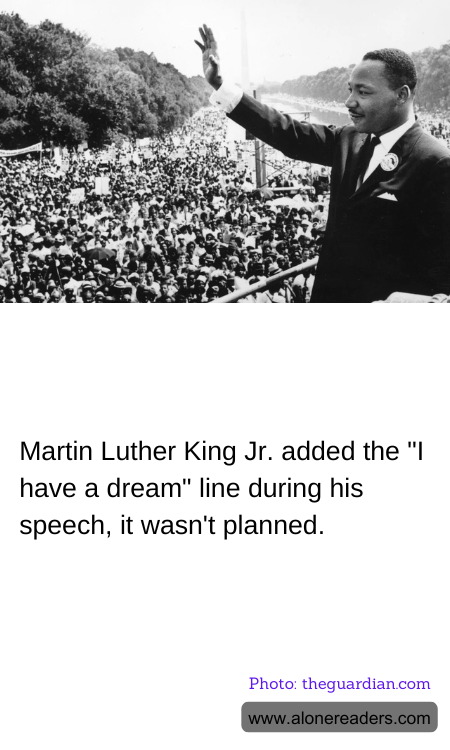
On August 28, 1963, during the historic March on Washington for Jobs and Freedom, Dr. Martin Luther King Jr. delivered what would become one of the most iconic speeches in American history. Standing on the steps of the Lincoln Memorial, he addressed a crowd of over 250,000 people, calling for civil and economic rights and an end to racism in the United States. While the speech is widely remembered for its powerful "I Have a Dream" refrain, many may not know that this pivotal section was not part of the original script.
Dr. King's speech was meticulously crafted with the help of his advisors and was intended to be a formal address on the need for racial equality and justice. The original draft, titled "Normalcy, Never Again," was a compelling piece in its own right, but it did not include the now-famous "I have a dream" segment. As Dr. King spoke, gospel singer Mahalia Jackson, who was standing nearby, urged him to "tell them about the dream." Inspired by her prompt and the energy of the moment, Dr. King set aside his prepared notes and began to improvise.
The spontaneous addition of the "I have a dream" section transformed the speech from a powerful address into a transcendent moment in history. Dr. King painted a vivid picture of a future where people would be judged by the content of their character rather than the color of their skin. His dream of equality and freedom resonated deeply with the audience and has continued to inspire generations. The imagery he invoked was both deeply personal and universally relatable, capturing the essence of the civil rights movement's aspirations.
This impromptu shift in his speech demonstrated Dr. King's exceptional oratory skills and his ability to connect with his audience on an emotional level. It also highlighted the importance of adaptability and intuition in effective communication. By responding to the moment and the crowd, Dr. King was able to deliver a message that transcended the immediate context and spoke to the enduring struggle for justice and equality.
The "I Have a Dream" speech remains a testament to the power of words to inspire change. Dr. King's ability to seize the moment and articulate a vision of hope and unity has left an indelible mark on history. His dream continues to serve as a guiding light for those who strive for a more just and equitable world. The unplanned nature of this iconic line serves as a reminder that sometimes the most profound moments arise from spontaneity and the courage to speak from the heart.