More About This Card
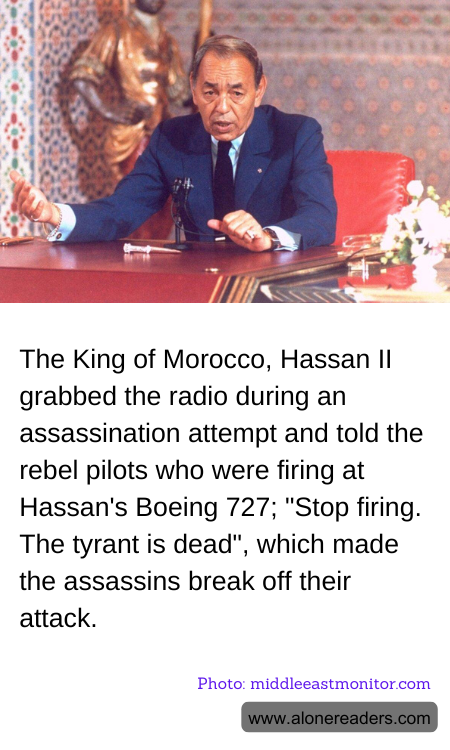
In the annals of modern history, few events capture the imagination quite like the dramatic assassination attempt on King Hassan II of Morocco. This remarkable episode unfolded on July 16, 1972, when the king's Boeing 727 came under attack from rebel pilots determined to change the course of Moroccan history. Yet, in a display of extraordinary presence of mind and quick thinking, King Hassan II managed to avert disaster with a simple yet ingenious ruse.
As the royal aircraft soared through the skies, it was suddenly besieged by gunfire from Moroccan Air Force jets. The pilots, part of a coup attempt, believed they were on a mission to eliminate the king. In the midst of chaos, King Hassan II seized the radio and, with remarkable composure, addressed the attacking pilots. "Stop firing. The tyrant is dead," he declared, a statement that would prove pivotal in the unfolding drama.
The king's words were a masterstroke of psychological warfare. By announcing his own demise, he sowed confusion and doubt among the attackers. The pilots, convinced they had accomplished their mission, ceased their assault and broke off the attack. This clever deception not only saved the king's life but also preserved the stability of the Moroccan state at a critical juncture.
King Hassan II's quick thinking during the assassination attempt is a testament to his leadership and strategic acumen. His ability to remain calm under pressure and turn the tide in his favor is a lesson in crisis management that resonates to this day. The incident also underscores the complexities of political power and the lengths to which individuals will go to secure or challenge it.
In the aftermath of the failed coup, King Hassan II took decisive action to consolidate his rule and address the underlying tensions that had led to the attempt on his life. His survival and subsequent reforms helped to stabilize Morocco and set the stage for a period of relative peace and progress in the kingdom.
This episode in Moroccan history serves as a reminder of the unpredictable nature of political power and the importance of resilience and adaptability in leadership. King Hassan II's ability to turn a potentially fatal situation to his advantage is a story that continues to inspire and captivate audiences around the world.