More About This Card
During the 1970s and 1980s, Miami, Florida, was a city under siege, grappling with an unprecedented wave of violence that earned it the grim moniker of "Murder Capital of the World." The surge in crime was largely fueled by the cocaine trade, which transformed the city into a battleground for drug cartels vying for control. The impact of this era was so profound that it left an indelible mark on the city’s history and infrastructure, including the operations of the Dade County Medical Examiner's Office.
The influx of drugs into Miami brought with it a corresponding rise in violent crime, as rival gangs and cartels fought for dominance. The murder rate soared, overwhelming local law enforcement and medical facilities. The Dade County Medical Examiner's Office, tasked with handling the aftermath of these violent confrontations, found itself facing an unprecedented challenge. The sheer volume of bodies exceeded the capacity of their morgue, necessitating extraordinary measures to manage the overflow.
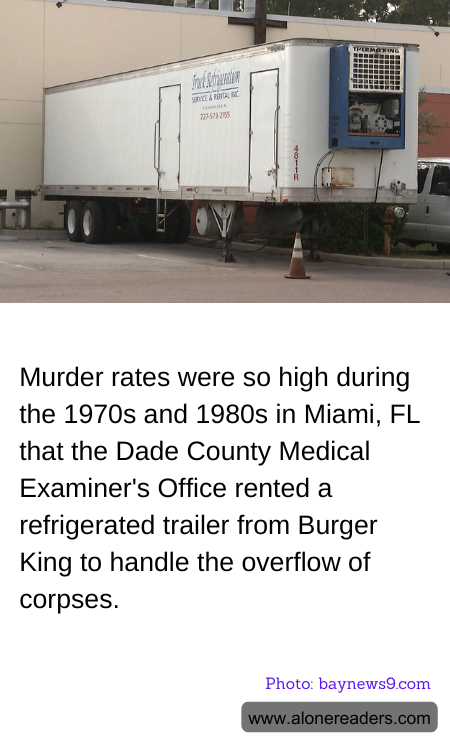
In a stark illustration of the crisis, the Medical Examiner's Office resorted to renting a refrigerated trailer from Burger King to store the excess corpses. This unconventional solution underscored the severity of the situation, highlighting the desperate measures required to cope with the relentless tide of violence. The use of a fast-food chain's trailer for such a somber purpose became a symbol of the era's chaos and the city's struggle to maintain order amidst the turmoil.
The situation in Miami during these decades was a complex interplay of socio-economic factors, law enforcement challenges, and the global drug trade. The city's strategic location made it a prime entry point for narcotics, and the resulting influx of drugs brought with it a host of societal issues. The violence was not confined to gang members and drug dealers; it spilled over into the broader community, affecting the lives of ordinary citizens and straining public resources.
Efforts to combat the crime wave included increased law enforcement presence, legislative changes, and community initiatives aimed at reducing violence and drug use. Over time, these efforts began to bear fruit, and the murder rate gradually declined. By the late 1980s and early 1990s, Miami started to shed its violent image, paving the way for a period of revitalization and growth.
Today, Miami is a vibrant and diverse city, known for its cultural richness and economic dynamism. The dark days of the 1970s and 1980s serve as a cautionary tale of the consequences of unchecked crime and the resilience required to overcome such challenges. The story of the refrigerated trailer from Burger King remains a poignant reminder of a tumultuous period in the city's history, a testament to the extraordinary circumstances that once gripped Miami and the enduring spirit of its people.