More About This Card
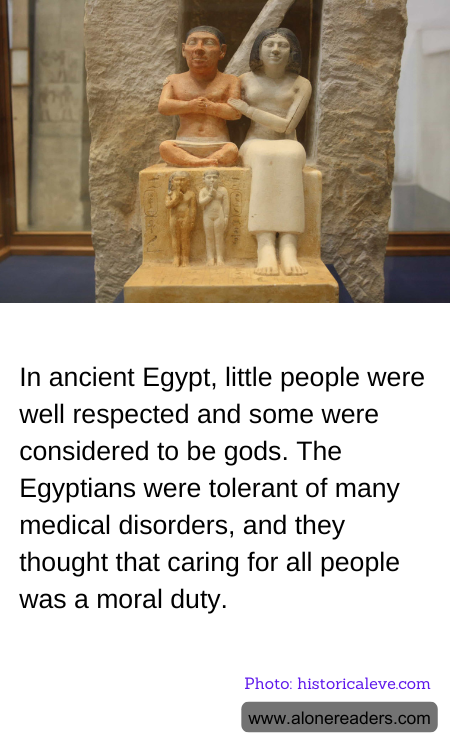
In ancient Egypt, a civilization renowned for its monumental architecture and profound cultural achievements, there existed a remarkable societal attitude towards individuals with dwarfism. Unlike many other ancient societies, where physical differences often led to marginalization, the Egyptians held little people in high regard, with some even being revered as divine entities. This unique perspective was deeply rooted in their religious beliefs and societal values, which emphasized the importance of diversity and the moral duty to care for all individuals, regardless of their physical attributes.
The esteem in which little people were held in ancient Egypt is evident in the roles they occupied within society. Many served in significant positions, such as personal attendants to pharaohs, jewelers, and entertainers. Their presence in the royal courts and temples underscores the respect they commanded. The Egyptians believed that individuals with dwarfism possessed special qualities and were often associated with certain deities. For instance, the god Bes, a protector of households and a deity of music and dance, was depicted as a dwarf. This association with divinity not only elevated their status but also integrated them into the spiritual fabric of Egyptian life.
The Egyptians' acceptance and respect for little people were part of a broader cultural attitude towards medical disorders and physical differences. They viewed these conditions not as curses or omens, but as natural variations of the human form. This perspective was likely influenced by their religious beliefs, which celebrated the diversity of creation. The Egyptians believed that all people were made in the image of the gods, and thus, every individual had intrinsic value and purpose. This belief system fostered a culture of tolerance and inclusivity, where caring for the vulnerable was seen as a moral obligation.
Ancient Egyptian society was characterized by a strong sense of community and responsibility towards one another. This is reflected in their medical practices, which were advanced for their time and focused on holistic care. Physicians in ancient Egypt were trained to treat a wide range of ailments and were expected to provide care to all members of society, regardless of their social status or physical condition. This commitment to healthcare and social welfare was a testament to their belief in the sanctity of life and the importance of compassion.
The legacy of ancient Egypt's respect for little people and their inclusive approach to medical disorders offers valuable lessons for contemporary society. It serves as a reminder of the importance of embracing diversity and fostering an environment where all individuals are valued and cared for. By looking to the past, we can find inspiration to build a more inclusive and compassionate world, where differences are celebrated and everyone is afforded the dignity and respect they deserve.