More About This Card
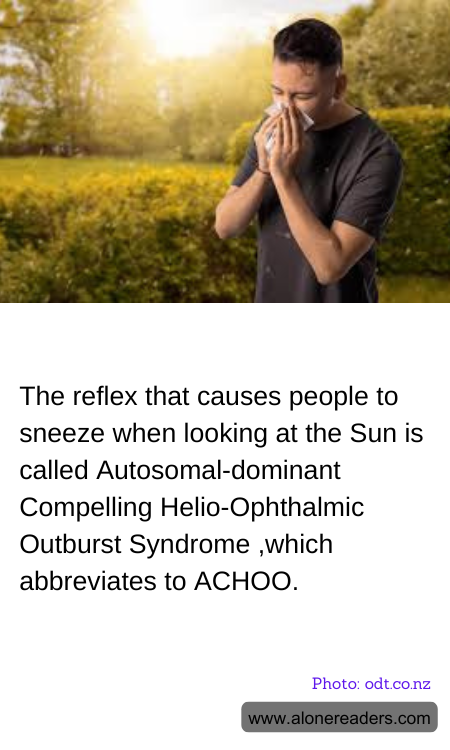
Sneezing is a common reflex that most people experience when they encounter irritants like dust or pollen. However, for some individuals, simply looking at the sun or a bright light can trigger an unexpected sneeze. This phenomenon is known as Autosomal-dominant Compelling Helio-Ophthalmic Outburst Syndrome, or more conveniently, ACHOO syndrome.
ACHOO syndrome is a genetic condition that affects an estimated 18-35% of the population. Despite its prevalence, many people are unaware of its scientific name or the reasons behind this peculiar reflex. The syndrome is termed "autosomal-dominant" because it can be passed down from just one parent who carries the gene. This means that if one parent has ACHOO syndrome, there is a 50% chance that their child will inherit it.
The exact mechanism behind ACHOO syndrome is not entirely understood, but it is believed to involve the trigeminal nerve, which is responsible for facial sensations and motor functions. When bright light enters the eyes, it may inadvertently stimulate this nerve, which is also involved in the sneezing reflex. This cross-wiring of signals can cause the brain to mistakenly interpret the light stimulus as an irritant, leading to a sneeze.
Interestingly, ACHOO syndrome is not harmful, and those who experience it generally do not require any treatment. However, it can be inconvenient, especially for individuals who spend a lot of time outdoors or in environments with fluctuating light conditions. Some people with ACHOO syndrome may choose to wear sunglasses or hats to minimize exposure to bright light and reduce the likelihood of sneezing.
While ACHOO syndrome might seem like a quirky trait, it highlights the fascinating complexity of human genetics and the diverse ways in which our bodies respond to environmental stimuli. It serves as a reminder of the intricate connections between our senses and reflexes, and how even the most mundane actions, like sneezing, can have a genetic basis.
For those who experience ACHOO syndrome, it can be a source of amusement or mild annoyance. However, understanding that it is a common and benign condition can help individuals embrace this unique aspect of their physiology. Whether it's a single sneeze or a series of them, ACHOO syndrome is just another example of the remarkable ways in which our bodies interact with the world around us.