More About This Card
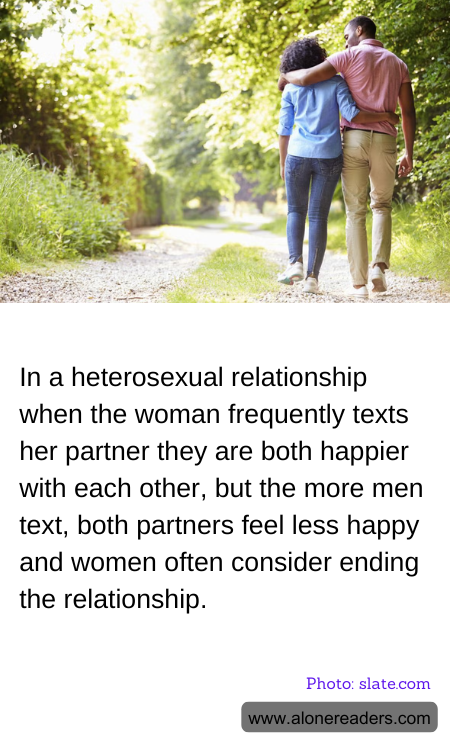
In the intricate dance of modern relationships, communication plays a pivotal role in determining the happiness and longevity of a partnership. Recent studies have shed light on an intriguing dynamic within heterosexual relationships: the frequency and initiator of texting can significantly impact the emotional satisfaction of both partners. Interestingly, when women frequently text their partners, it often correlates with increased happiness for both individuals. However, the scenario shifts when men are the ones frequently initiating text conversations, leading to a decrease in relationship satisfaction and, in some cases, prompting women to contemplate ending the relationship.
The positive impact of women frequently texting their partners can be attributed to several factors. For many women, texting serves as a means of maintaining emotional closeness and connection throughout the day. It allows them to express affection, share experiences, and provide support, which can strengthen the emotional bond between partners. This consistent communication can reassure both parties of their commitment to each other, fostering a sense of security and contentment within the relationship.
Conversely, when men are the primary initiators of frequent texting, the dynamic appears to shift. This phenomenon may be rooted in traditional gender roles and expectations. In many cultures, men are often expected to be less expressive and more reserved in their communication styles. When men text frequently, it might be perceived as a deviation from these norms, potentially leading to misunderstandings or feelings of pressure. Women, who might expect men to be more reserved, could interpret frequent texting as a sign of neediness or insecurity, which can be off-putting and lead to dissatisfaction.
Moreover, the difference in texting frequency and its impact on relationship satisfaction could also be linked to the content and context of the messages. Women might use texting as a tool for emotional expression and connection, while men might use it for logistical purposes or to seek reassurance. This disparity in communication styles can create a disconnect, where the intent behind the messages is misinterpreted, leading to frustration and unhappiness.
Understanding these dynamics is crucial for couples striving to maintain a healthy and fulfilling relationship. Open communication about texting habits and preferences can help bridge the gap between partners' expectations and realities. By discussing how often and in what context each partner prefers to communicate, couples can find a balance that works for both, ensuring that texting remains a tool for connection rather than a source of contention.
Ultimately, the key to a happy relationship lies in understanding and respecting each other's communication styles. By acknowledging the nuances of texting dynamics, couples can foster a deeper emotional connection and navigate the complexities of modern relationships with greater ease and satisfaction.