More About This Card
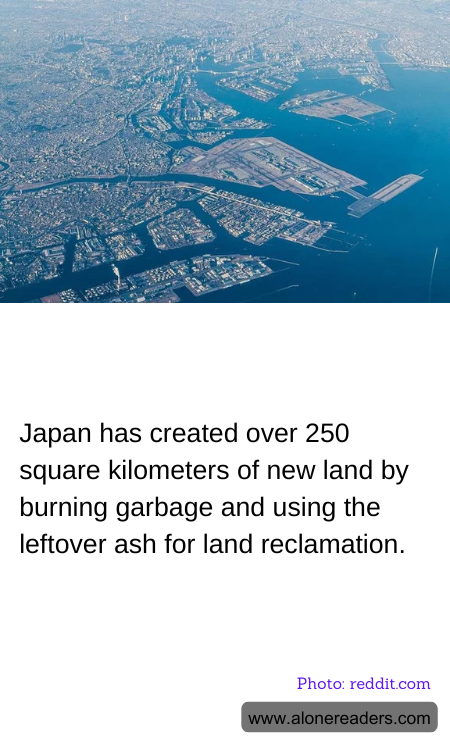
Japan, a nation known for its innovative solutions to environmental challenges, has embarked on an ambitious project that combines waste management with land reclamation. Over the years, Japan has successfully created over 250 square kilometers of new land by burning garbage and using the leftover ash for land reclamation. This remarkable feat not only addresses the issue of waste disposal but also contributes to the country's need for more usable land, given its limited space and high population density.
The process begins with the incineration of waste, a method widely adopted in Japan due to its efficiency in reducing the volume of garbage. Incineration significantly decreases the amount of waste, leaving behind ash that can be repurposed. This ash, once considered a mere byproduct, is now a valuable resource in Japan's land reclamation projects. By mixing the ash with other materials, it is used to fill in coastal areas, creating new land that can be utilized for various purposes, including industrial zones, parks, and even residential areas.
This innovative approach not only helps manage the country's waste but also mitigates the environmental impact of landfills. Traditional landfills pose significant environmental risks, including soil and water contamination. By reducing reliance on landfills, Japan minimizes these risks and promotes a more sustainable method of waste management. Moreover, the creation of new land helps alleviate the pressure on existing urban areas, providing much-needed space for development and infrastructure.
Japan's success in this endeavor is a testament to its commitment to sustainability and resourcefulness. The country's ability to turn a waste management challenge into an opportunity for land creation is an inspiring example for other nations facing similar issues. By investing in technology and innovation, Japan has demonstrated that it is possible to address environmental concerns while simultaneously enhancing economic and social development.
The benefits of this approach extend beyond environmental and spatial gains. The creation of new land has economic implications, as it opens up opportunities for new businesses and industries. It also contributes to job creation, both in the construction of reclaimed land and in the industries that subsequently develop there. Furthermore, the new spaces can be designed with sustainability in mind, incorporating green technologies and infrastructure that promote a healthier environment.
Japan's land reclamation efforts through waste incineration and ash utilization highlight the potential for creative solutions to global challenges. As the world grapples with issues of waste management and land scarcity, Japan's model offers a viable path forward. By transforming waste into a resource, Japan not only addresses its own needs but also sets a precedent for sustainable development that other countries can emulate. This innovative approach underscores the importance of viewing challenges as opportunities for growth and improvement, paving the way for a more sustainable future.