More About This Card
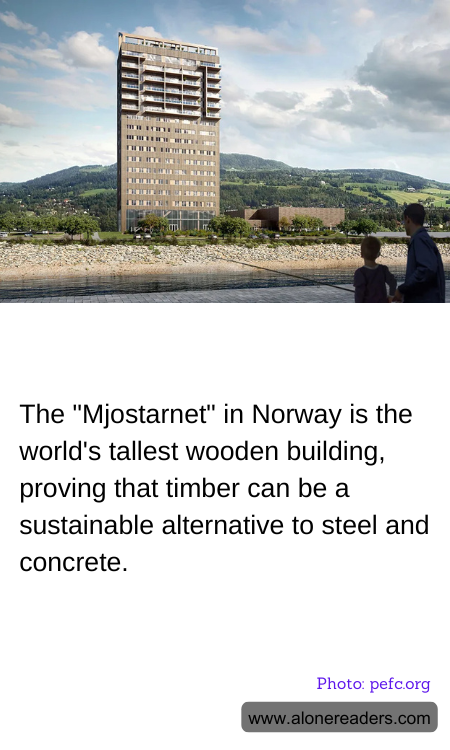
In the serene landscape of Brumunddal, Norway, stands an architectural marvel that challenges conventional construction norms and redefines the possibilities of sustainable building. The Mjøstårnet, the world's tallest wooden building, rises majestically to a height of 85.4 meters (280 feet), showcasing the potential of timber as a viable and eco-friendly alternative to traditional construction materials like steel and concrete.
Completed in March 2019, the Mjøstårnet is a testament to the ingenuity and forward-thinking approach of its creators. Designed by Voll Arkitekter and developed by AB Invest, this 18-story structure is not just a feat of engineering but also a symbol of environmental consciousness. The building houses a hotel, apartments, offices, a restaurant, and common areas, demonstrating that timber can be used for a variety of purposes without compromising on strength or safety.
The use of timber in construction is not a novel concept; however, the scale and height of Mjøstårnet push the boundaries of what was previously thought possible. The building is primarily constructed using cross-laminated timber (CLT) and glued laminated timber (glulam), both of which are known for their strength and durability. These materials are sourced from sustainably managed forests, ensuring that the environmental impact is minimized. Timber, as a renewable resource, offers a significant reduction in carbon footprint compared to steel and concrete, which are energy-intensive to produce.
One of the most remarkable aspects of Mjøstårnet is its ability to withstand the elements. Norway's climate can be harsh, with strong winds and heavy snowfall, yet the building's design ensures stability and resilience. The use of advanced engineering techniques and rigorous testing has proven that timber can be as reliable as more traditional materials, even in challenging conditions.
The success of Mjøstårnet has sparked a renewed interest in timber construction worldwide. Architects and developers are increasingly looking to wood as a sustainable solution to urbanization challenges. Timber buildings not only reduce carbon emissions but also offer aesthetic and acoustic benefits, creating warm, inviting spaces that connect occupants with nature.
Mjøstårnet stands as a beacon of what can be achieved when innovation meets sustainability. It challenges preconceived notions about the limitations of timber and opens the door to a future where cities can grow without compromising the health of our planet. As the world grapples with the urgent need to address climate change, the Mjøstårnet serves as a powerful reminder that sustainable development is not only possible but also practical and desirable.