More About This Card
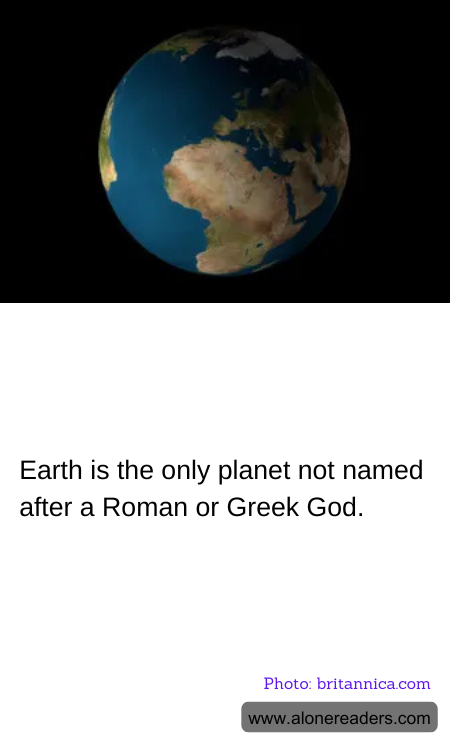
In the vast expanse of our solar system, each planet carries a name steeped in ancient mythology, a tribute to the gods and goddesses of Roman and Greek lore. Mercury, Venus, Mars, Jupiter, Saturn, Uranus, and Neptune all bear the names of deities, their celestial paths echoing stories of power, beauty, war, and wisdom. Yet, amidst this divine assembly, Earth stands alone, its name a humble nod to the ground beneath our feet rather than the heavens above.
The name "Earth" derives from Old English and Germanic words such as "eorðe" and "erde," which simply mean "ground" or "soil." Unlike its planetary siblings, Earth’s name does not evoke images of divine beings or mythical tales. Instead, it reflects the human experience, rooted in the tangible and the terrestrial. This distinction is perhaps fitting, as Earth is the only planet known to harbor life, a vibrant tapestry of ecosystems and cultures that thrive on its surface.
The choice of names for the other planets can be traced back to ancient civilizations that gazed at the night sky, seeking to understand the celestial bodies that moved among the stars. The Romans, in particular, named the planets after their gods, a practice that has endured through the ages. Mercury, the swift messenger of the gods, was aptly chosen for the fastest planet in our solar system. Venus, the goddess of love and beauty, lent her name to the brightest planet. Mars, with its reddish hue, was named after the god of war, while Jupiter, the largest planet, was named for the king of the gods. Saturn, with its striking rings, was named after the god of agriculture and time. Uranus and Neptune, discovered later, continued this tradition, named after the god of the sky and the god of the sea, respectively.
Earth's unique name underscores its distinct role in the cosmos. It is a reminder of our connection to the land and the life it sustains. While the other planets' names inspire awe and wonder, Earth’s name invites reflection on our place within the universe. It emphasizes the importance of stewardship and the responsibility we bear to protect our planet for future generations.
In a world where mythology and science often intersect, Earth’s name serves as a bridge between the ancient and the modern. It is a testament to humanity's enduring relationship with the planet, a relationship that is both practical and profound. As we continue to explore the cosmos, seeking to understand the mysteries of the universe, Earth remains our home, a singular planet with a name that speaks to the essence of life itself.