More About This Card
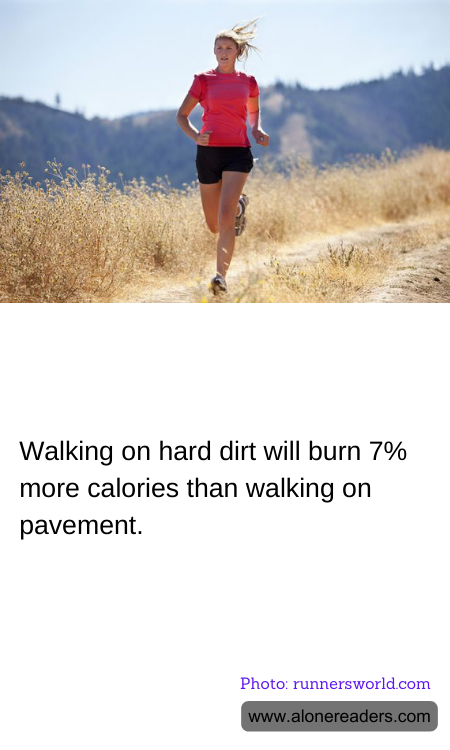
Walking is a simple yet effective form of exercise that many people incorporate into their daily routines for its numerous health benefits. While the surface on which one walks might seem inconsequential, recent studies suggest that walking on hard dirt can actually burn 7% more calories than walking on pavement. This intriguing finding offers a new perspective on how the choice of walking surface can impact fitness outcomes.
The primary reason for the increased calorie burn on hard dirt is the uneven and less stable nature of the surface. Unlike the smooth, predictable texture of pavement, hard dirt often presents a variety of small obstacles and irregularities. These require the body to engage additional muscles for balance and stability, particularly in the core and lower body. As a result, the body works harder, thus expending more energy and burning more calories. This subtle yet significant difference can be especially beneficial for those looking to maximize the efficiency of their walking workouts without increasing the duration or intensity.
Moreover, walking on hard dirt can be gentler on the joints compared to pavement. The natural give of dirt surfaces can help absorb some of the impact that occurs with each step, reducing the stress on knees, hips, and ankles. This can be particularly advantageous for older adults or individuals with joint concerns, allowing them to enjoy the benefits of walking while minimizing discomfort or risk of injury. Additionally, walking in natural settings often associated with dirt paths can enhance mental well-being, offering a refreshing escape from urban environments and a chance to connect with nature.
For those interested in incorporating hard dirt walking into their fitness routine, it is important to consider a few practical tips. Wearing appropriate footwear with good traction can help prevent slips and provide necessary support. Starting with shorter distances and gradually increasing the duration can help the body adapt to the new surface. It is also advisable to remain mindful of the surroundings, as natural paths may present unexpected obstacles like roots or rocks.
In conclusion, the choice of walking surface can have a meaningful impact on the effectiveness of a walking workout. By opting for hard dirt over pavement, individuals can enjoy a modest increase in calorie burn while also benefiting from a more joint-friendly and mentally rejuvenating experience. Whether walking for fitness, leisure, or mental clarity, exploring natural paths can offer a rewarding alternative to the conventional pavement stroll.