More About This Card
In the annals of history, the invention of the flushable toilet stands as a testament to human ingenuity and the quest for improved sanitation. This revolutionary invention can be credited to Sir John Harington, a figure who, despite his noble lineage and close ties to the English monarchy, is often remembered for his contribution to modern plumbing. Born in 1560, Harington was the godson of Queen Elizabeth I, a relationship that afforded him a unique position within the royal court and the opportunity to pursue his inventive endeavors.
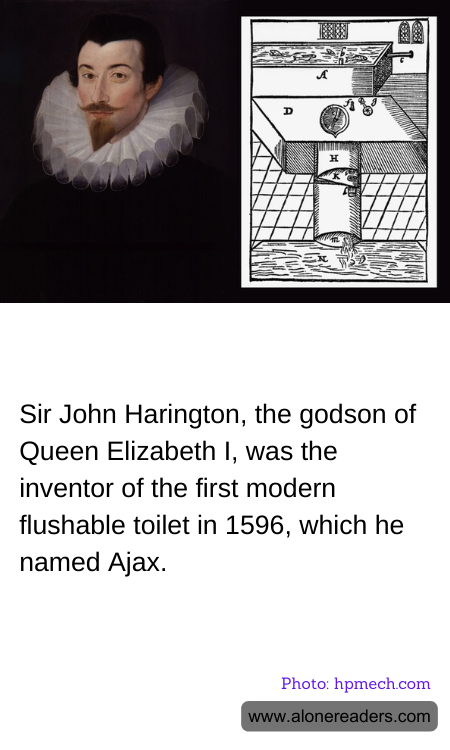
In 1596, Sir John Harington introduced the world to the first modern flushable toilet, which he whimsically named "Ajax." The name itself was a clever play on words, derived from the term "a jakes," a common slang for a toilet at the time. Harington's design was a significant departure from the rudimentary sanitation facilities of the era, which often consisted of chamber pots or primitive privies. His invention featured a cistern that could be flushed with water, effectively removing waste and reducing odors—a groundbreaking advancement in personal hygiene and public health.
Harington's Ajax was not merely a technical innovation; it was also a reflection of his wit and literary prowess. He documented his invention in a satirical pamphlet titled "A New Discourse upon a Stale Subject: The Metamorphosis of Ajax," which cleverly combined humor with practical advice on sanitation. This publication not only detailed the mechanics of his flushable toilet but also critiqued the societal norms of the time, showcasing Harington's sharp intellect and his ability to blend creativity with functionality.
Despite its ingenuity, the Ajax did not gain widespread popularity during Harington's lifetime. The high cost of installation and the limited availability of running water in most households meant that the flushable toilet remained a luxury item, primarily enjoyed by the affluent. However, Harington's invention laid the groundwork for future advancements in plumbing technology, eventually leading to the widespread adoption of flush toilets in the 19th century.
Today, Sir John Harington's contribution to sanitation is recognized as a pivotal moment in the evolution of modern plumbing. His innovative spirit and the creation of the Ajax underscore the importance of addressing basic human needs through technological advancement. As we continue to seek solutions for global sanitation challenges, Harington's legacy serves as a reminder of the enduring impact that a single invention can have on society. His story is a testament to the power of creativity and the pursuit of progress, qualities that continue to inspire inventors and innovators around the world.