More About This Card
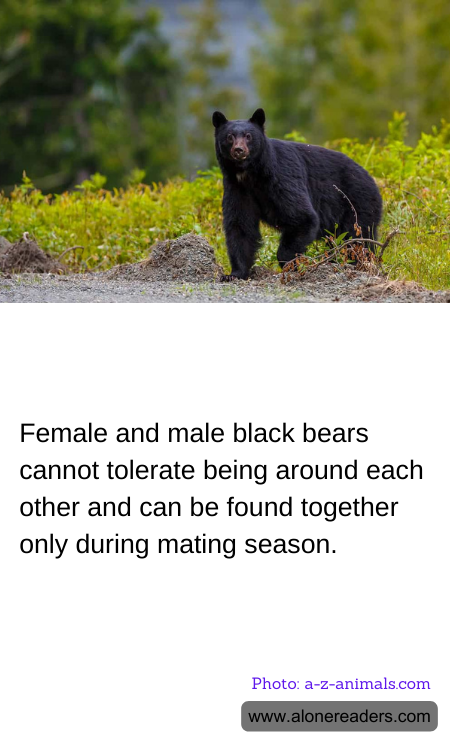
In the vast and varied ecosystems of North America, black bears are a common sight, known for their adaptability and solitary nature. Among the intriguing aspects of their behavior is the distinct social dynamic between male and female black bears. Unlike many other species that form social groups or pairs, black bears are predominantly solitary creatures, and this is particularly evident in the relationship between males and females.
Black bears, scientifically known as Ursus americanus, exhibit a fascinating behavioral pattern where males and females generally avoid each other outside of the mating season. This avoidance is primarily driven by the bears' instinctual need for space and resources. Both male and female black bears are territorial, and their territories often overlap only minimally. This separation is crucial for their survival, as it reduces competition for food and habitat, which can be scarce in certain environments.
During most of the year, male and female black bears lead independent lives. Males, who are typically larger and more dominant, roam over vast areas in search of food and to establish their territory. Females, on the other hand, tend to have smaller ranges, which they defend fiercely, especially when they have cubs. This territorial behavior ensures that each bear has access to sufficient resources to sustain themselves and, in the case of females, their offspring.
The only time male and female black bears come together is during the mating season, which occurs from late spring to early summer. During this period, the otherwise solitary bears seek each other out for reproduction. The mating season is a brief window where the usual boundaries are relaxed, and males may travel long distances to find receptive females. Once mating is complete, the bears part ways, with the female assuming the responsibility of raising the cubs alone.
This solitary lifestyle has evolved as an effective strategy for survival. By minimizing interactions, black bears reduce the risk of conflict and competition, which can be detrimental in the wild. This behavior also helps in reducing the spread of diseases and parasites, which can be more prevalent in species that live in close-knit groups.
In summary, the relationship between male and female black bears is a remarkable example of nature's balance between independence and cooperation. While they may not tolerate each other's presence for most of the year, their brief encounters during the mating season ensure the continuation of the species. This dynamic highlights the adaptability and resilience of black bears, allowing them to thrive across diverse habitats in North America. Understanding these behaviors not only enriches our knowledge of wildlife but also underscores the importance of preserving their natural environments to maintain the delicate balance of their ecosystems.