More About This Card
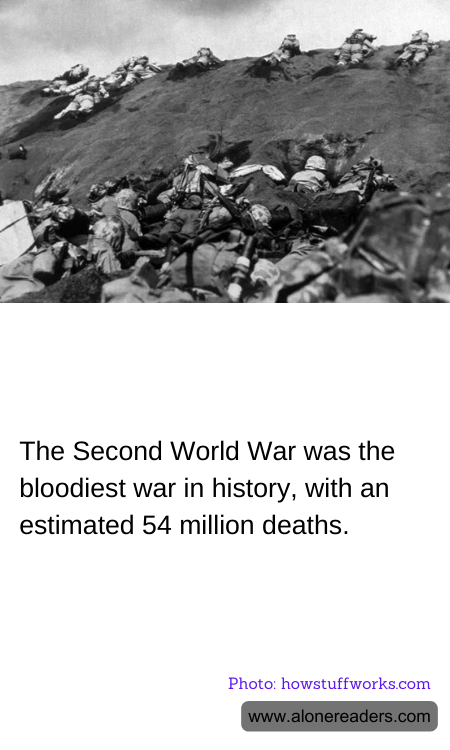
The Second World War, which raged from 1939 to 1945, stands as the most devastating conflict in human history, claiming an estimated 54 million lives. This staggering loss of life underscores the war's profound impact on nations and individuals alike, leaving a legacy that continues to shape global relations and historical consciousness.
The war's unprecedented scale was fueled by the involvement of more than 30 countries, divided primarily between the Axis powers, led by Germany, Italy, and Japan, and the Allies, including the United States, the Soviet Union, the United Kingdom, and China. The conflict spanned continents, with battles fought across Europe, Asia, Africa, and the Pacific. This global reach contributed to the high death toll, as military and civilian casualties mounted in the face of relentless warfare.
One of the most tragic aspects of the Second World War was the immense civilian suffering. The Holocaust, orchestrated by Nazi Germany, resulted in the systematic genocide of six million Jews, along with millions of others deemed undesirable by the regime, including Romani people, disabled individuals, and political dissidents. In Asia, the war's brutality was exemplified by the Nanking Massacre, where hundreds of thousands of Chinese civilians were killed by Japanese forces. These atrocities highlight the war's moral and ethical failures, reminding us of the depths of human cruelty.
The war also saw the introduction of new military technologies and strategies that increased its lethality. The use of tanks, aircraft, and naval power transformed battlefields, while the development of nuclear weapons marked a chilling new era in warfare. The atomic bombings of Hiroshima and Nagasaki in 1945 resulted in the deaths of over 200,000 people, demonstrating the catastrophic potential of nuclear warfare and prompting a global reevaluation of military ethics and the pursuit of peace.
Despite the immense destruction, the Second World War also led to significant geopolitical changes and the establishment of international institutions aimed at preventing future conflicts. The United Nations was founded in 1945, with the goal of fostering international cooperation and ensuring peace and security. The war's end also saw the emergence of the United States and the Soviet Union as superpowers, setting the stage for the Cold War and reshaping global alliances.
The legacy of the Second World War is a complex tapestry of tragedy, resilience, and transformation. It serves as a somber reminder of the consequences of unchecked aggression and the importance of striving for peace and understanding among nations. As we reflect on this dark chapter in history, it is crucial to honor the memory of those who perished and to learn from the past to build a more just and peaceful world for future generations.