More About This Card
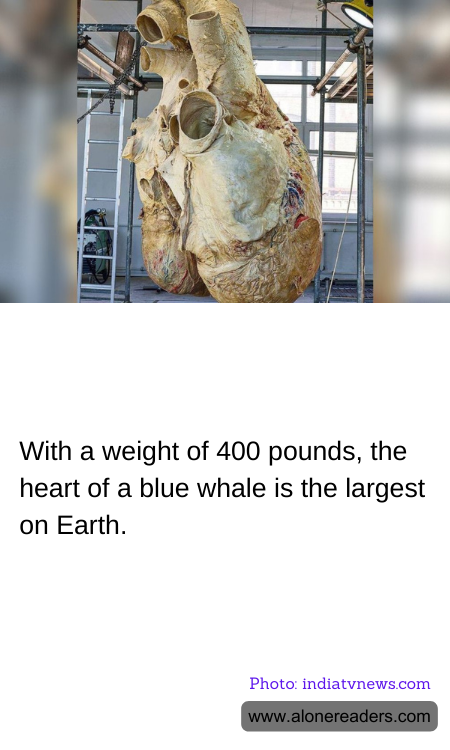
The blue whale, the largest animal to have ever existed on Earth, is a marvel of nature in many ways. Among its most astonishing features is its heart, which weighs an incredible 400 pounds, making it the largest heart of any living creature. This massive organ is a testament to the blue whale's immense size and the extraordinary adaptations that have evolved to support its life in the ocean.
The heart of a blue whale is roughly the size of a small car, and its sheer size is necessary to pump blood throughout the whale's enormous body, which can reach lengths of up to 100 feet. This heart beats at a slow and steady pace, typically around 8 to 10 times per minute when the whale is at rest. However, during a deep dive, the heart rate can drop even further, conserving oxygen and allowing the whale to remain submerged for extended periods. This adaptation is crucial for the whale's survival in the deep ocean, where it hunts for krill and other small marine organisms.
The blue whale's heart is not only remarkable for its size but also for its efficiency. It pumps an estimated 60 gallons of blood with each beat, circulating it through the whale's body to deliver oxygen and nutrients to its cells. The heart's four chambers work in perfect harmony, ensuring that the whale's massive body receives the blood flow it needs to function. This efficient circulatory system supports the whale's active lifestyle, allowing it to travel thousands of miles across the ocean in search of food and mates.
Despite its size, the blue whale's heart is not easily visible to humans. It is nestled deep within the whale's body, protected by layers of blubber and muscle. However, scientists have been able to study this incredible organ through the examination of deceased whales and advanced imaging techniques. These studies have provided valuable insights into the biology of the blue whale and the adaptations that have allowed it to thrive in the ocean for millions of years.
The blue whale's heart is a symbol of the wonders of the natural world and the incredible diversity of life on our planet. It serves as a reminder of the importance of preserving the ocean and its inhabitants, many of which are threatened by human activities such as pollution, climate change, and overfishing. By understanding and appreciating the unique features of creatures like the blue whale, we can foster a greater sense of stewardship for the environment and work towards a future where these magnificent animals continue to thrive.
In conclusion, the heart of a blue whale is not just an anatomical marvel but also a symbol of the intricate and delicate balance of life in the ocean. Its size and function are a testament to the evolutionary ingenuity that has allowed the blue whale to become the largest animal on Earth. As we continue to explore and learn about the natural world, the blue whale's heart remains a powerful reminder of the beauty and complexity of life beneath the waves.