More About This Card
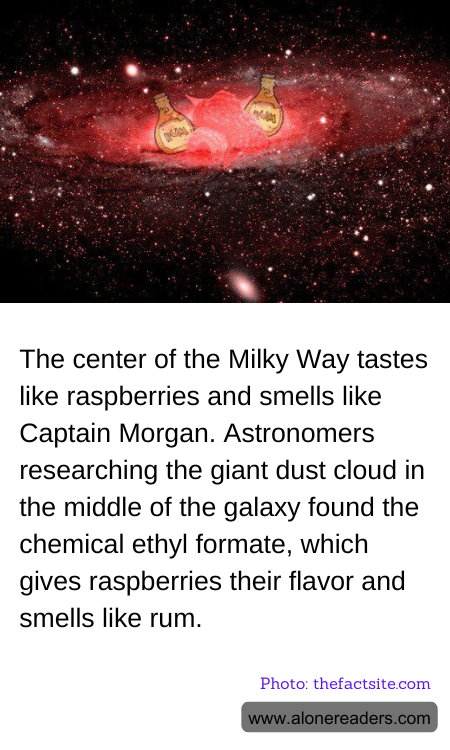
In a fascinating blend of science and sensory delight, astronomers have discovered that the center of our Milky Way galaxy might just be a cosmic cocktail of flavors and aromas. This revelation comes from the study of a giant dust cloud located in the heart of the galaxy, where researchers have identified the presence of ethyl formate, a chemical compound that intriguingly contributes to the flavor of raspberries and the aroma of rum.
Ethyl formate is an ester, a type of organic compound that is often responsible for the pleasant scents and flavors found in nature. It is the very compound that gives raspberries their distinctive taste and is also a key component in the aroma of rum, particularly reminiscent of Captain Morgan. This discovery was made possible through the use of radio telescopes, which allow scientists to detect the unique chemical signatures of various compounds in space. By analyzing the light emitted from the dust cloud, astronomers were able to identify the presence of ethyl formate among other complex molecules.
The implications of this discovery are as intriguing as they are delightful. It suggests that the building blocks of life and the sensory experiences we enjoy on Earth are not unique to our planet. Instead, they are part of a broader cosmic tapestry, woven into the very fabric of the universe. The presence of such complex organic molecules in space supports the idea that the ingredients for life could be widespread throughout the galaxy, potentially seeding planets with the necessary components for life as we know it.
While the notion of a raspberry-flavored, rum-scented galaxy might sound like the stuff of science fiction, it underscores the interconnectedness of the universe and the surprising ways in which it mirrors the familiar experiences of life on Earth. This discovery also highlights the incredible capabilities of modern astronomy, which continues to unveil the mysteries of the cosmos in ways that captivate both scientists and the public alike.
For those with a penchant for the whimsical, the idea of the Milky Way as a cosmic confectionery offers a charming perspective on the universe. It invites us to imagine the galaxy not just as a vast expanse of stars and planets, but as a place filled with the potential for unexpected delights. As we continue to explore the universe, who knows what other flavors and aromas might be waiting to be discovered among the stars?