More About This Card
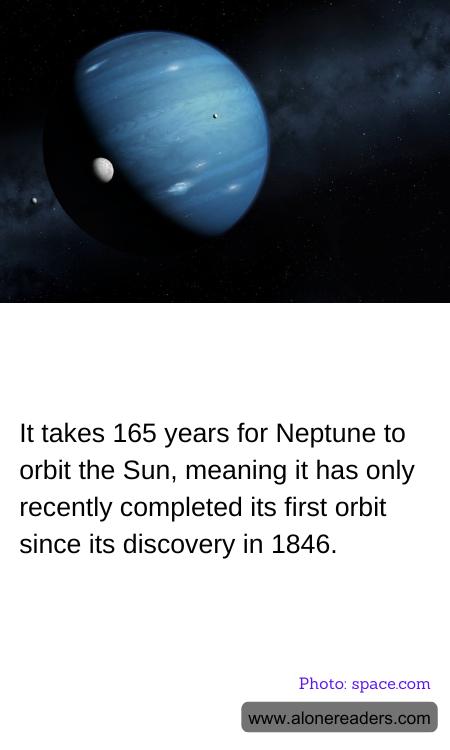
In the vast expanse of our solar system, Neptune stands as a distant and enigmatic giant. Discovered in 1846 by astronomers Johann Galle and Urbain Le Verrier, Neptune is the eighth planet from the Sun and the most distant in our solar system. What makes Neptune particularly fascinating is its incredibly lengthy orbit around the Sun. It takes a staggering 165 Earth years for Neptune to complete a single orbit, meaning that it has only recently completed its first full journey around the Sun since its discovery.
Neptune's orbit is a testament to the vastness of our solar system. While Earth completes its orbit in a mere 365 days, Neptune's journey is a slow and majestic trek through the cosmos. This lengthy orbit means that each season on Neptune lasts for over 40 Earth years. Imagine experiencing winter or summer for four decades! This slow progression through its orbit also means that the planet has only recently returned to the position in the sky where it was first observed by humans.
The completion of Neptune's first orbit since its discovery is a significant milestone in the field of astronomy. It serves as a reminder of the patience and persistence required in the study of celestial bodies. For astronomers, this event is an opportunity to reflect on how much we have learned about Neptune since its discovery. In the 19th century, Neptune was little more than a distant blue dot in the sky. Today, thanks to advancements in technology and space exploration, we have a much deeper understanding of this ice giant.
Neptune is known for its striking blue color, which is due to the presence of methane in its atmosphere. This gas absorbs red light and reflects blue, giving the planet its distinctive hue. Neptune is also home to some of the most extreme weather in the solar system, with winds reaching speeds of up to 1,200 miles per hour. These fierce winds, along with its dynamic atmosphere, make Neptune a subject of great interest for scientists studying planetary weather patterns.
The completion of Neptune's first orbit is not just a scientific milestone but also a moment that invites us to ponder our place in the universe. It highlights the incredible scale of time and space, reminding us of the vastness of the cosmos and the relatively brief span of human history. As we continue to study Neptune and other celestial bodies, we gain not only knowledge but also a sense of wonder and curiosity about the universe we inhabit.
In the years to come, as Neptune embarks on its second orbit since its discovery, astronomers will continue to unravel its mysteries. With each passing year, we learn more about this distant world, deepening our understanding of the solar system and our place within it. Neptune's journey around the Sun is a slow and steady reminder of the enduring nature of the cosmos and the endless possibilities for discovery that lie ahead.