More About This Card
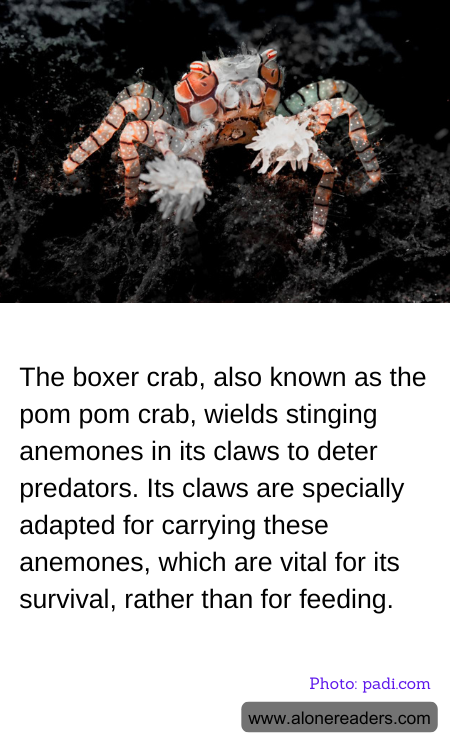
In the vibrant and diverse world of marine life, the boxer crab, also known as the pom pom crab, stands out as a fascinating example of nature's ingenuity. This small crustacean, belonging to the family Xanthidae, has developed a unique symbiotic relationship with sea anemones, which it wields like boxing gloves to fend off predators. This remarkable adaptation not only highlights the crab's survival strategy but also underscores the intricate relationships that can develop between different species in the ocean.
The boxer crab's claws are not designed for the typical tasks of feeding or defense that one might expect. Instead, they are specially adapted to carry tiny sea anemones. These anemones possess stinging cells, known as nematocysts, which can deliver a painful sting to potential threats. By holding these anemones in its claws, the boxer crab effectively turns them into living weapons, deterring predators with the threat of a sting. This clever use of anemones is a testament to the crab's resourcefulness and its ability to adapt to its environment.
The relationship between the boxer crab and the sea anemones is a classic example of mutualism, where both parties benefit. While the crab gains protection from predators, the anemones receive the advantage of increased mobility and access to food particles stirred up by the crab's movements. This partnership is vital for the crab's survival, as its claws are not suited for capturing prey or defending itself without the anemones. The anemones, in turn, thrive by being transported to new feeding grounds, ensuring a steady supply of nutrients.
Interestingly, the boxer crab's reliance on anemones has led to some remarkable behaviors. If a crab loses one of its anemones, it may attempt to "steal" one from another crab. Alternatively, it can split its remaining anemone in half, allowing each claw to hold a piece. This ability to divide the anemone demonstrates the crab's adaptability and highlights the importance of these creatures to its survival.
The boxer crab's unique adaptation serves as a reminder of the complexity and wonder of marine ecosystems. It showcases how species can evolve in unexpected ways to overcome challenges and thrive in their environments. For those who explore the ocean's depths, the sight of a boxer crab brandishing its anemone "pom poms" is a captivating glimpse into the intricate dance of life beneath the waves. As we continue to study and appreciate these remarkable creatures, we gain a deeper understanding of the delicate balance that sustains the rich tapestry of life in our oceans.