More About This Card
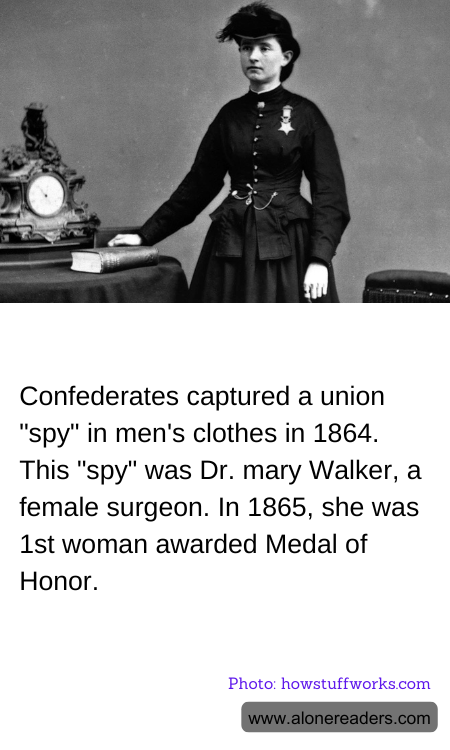
In the midst of the American Civil War, a time when the nation was torn apart by conflict and societal norms were rigidly enforced, Dr. Mary Edwards Walker emerged as a trailblazer who defied conventions and made history. In 1864, she was captured by Confederate forces, accused of being a Union spy. However, Dr. Walker was not a spy; she was a pioneering female surgeon, one of the few women in her field during that era.
Dr. Walker's journey to becoming a surgeon was marked by determination and resilience. Born in 1832 in Oswego, New York, she was raised in a progressive family that valued education and equality. She graduated from Syracuse Medical College in 1855, becoming one of the first women in the United States to earn a medical degree. Despite facing significant gender-based discrimination, she was undeterred in her pursuit of a career in medicine.
When the Civil War broke out in 1861, Dr. Walker volunteered her services to the Union Army. Initially, she was met with resistance and skepticism, as women were not permitted to serve as surgeons. Undeterred, she worked as a volunteer, providing medical care to wounded soldiers and eventually securing a contract position as an assistant surgeon. Her dedication and skill earned her the respect of many, but her unconventional attire—often wearing men's clothing for practicality—made her a subject of controversy.
In April 1864, while crossing enemy lines to treat wounded civilians, Dr. Walker was captured by Confederate troops. Her attire and presence in a combat zone led to accusations of espionage. She was imprisoned in Richmond, Virginia, for several months, enduring harsh conditions before being released in a prisoner exchange. Her capture and subsequent release highlighted the challenges faced by women who dared to step outside traditional roles during the war.
Dr. Walker's contributions did not go unnoticed. In 1865, she was awarded the Medal of Honor, becoming the first woman to receive the United States' highest military decoration. The award recognized her "valuable service to the Government" and her unwavering commitment to the care of soldiers. Although her medal was controversially rescinded in 1917—along with those of over 900 others—due to changes in the award criteria, it was posthumously reinstated in 1977, affirming her rightful place in history.
Dr. Mary Walker's legacy extends beyond her wartime service. She was a staunch advocate for women's rights, using her platform to push for social reform and gender equality. Her life and achievements continue to inspire generations, serving as a testament to the power of perseverance and the impact of challenging societal norms. As the first woman to receive the Medal of Honor, Dr. Walker's story is a powerful reminder of the courage and determination required to break barriers and pave the way for future generations.