More About This Card
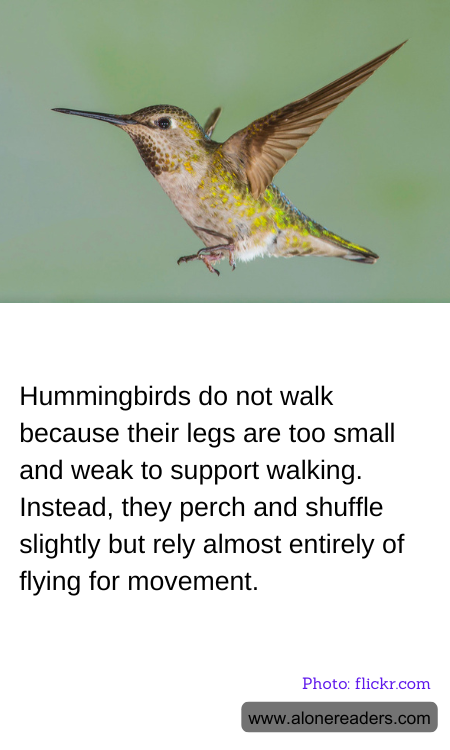
Hummingbirds are among the most fascinating creatures in the avian world, captivating bird enthusiasts and casual observers alike with their dazzling colors and extraordinary flying abilities. These tiny birds, often no larger than a human thumb, are renowned for their rapid wing beats and hovering capabilities. However, one lesser-known fact about hummingbirds is that they do not walk. This peculiar trait is due to their small and weak legs, which are not designed to support walking.
Unlike many other birds that use their legs for walking, hopping, or running, hummingbirds have evolved in a way that prioritizes flight over terrestrial movement. Their legs are short and positioned in a way that makes walking inefficient and cumbersome. Instead of walking, hummingbirds are adept at perching. They can shuffle slightly along a branch or wire, but this movement is minimal and not their primary mode of getting around. The structure of their legs is perfectly suited for perching, allowing them to grip tightly onto branches or feeders while they rest or feed.
The reliance on flight for movement is a remarkable adaptation that serves hummingbirds well. Their wings are incredibly powerful, allowing them to fly forwards, backwards, and even upside down. This agility in the air is crucial for their survival, as it enables them to quickly access nectar from flowers, evade predators, and migrate over long distances. The energy demands of such flight are immense, and hummingbirds have a high metabolism to match, requiring them to consume large amounts of nectar daily.
While their inability to walk might seem like a limitation, it is, in fact, a testament to the hummingbird's specialized evolution. By focusing on flight, these birds have become some of the most efficient and skilled flyers in the animal kingdom. Their unique adaptations allow them to thrive in environments where other birds might struggle, making them a vital part of many ecosystems as pollinators.
In conclusion, the hummingbird's small and weak legs are not a disadvantage but rather an evolutionary trade-off that has allowed them to become masters of the sky. Their reliance on flight over walking highlights the incredible diversity of adaptations in the natural world, reminding us of the intricate balance of form and function that defines life on Earth. Whether observed in a garden or a forest, the hummingbird's aerial prowess continues to inspire awe and wonder in all who have the privilege of witnessing it.