More About This Card
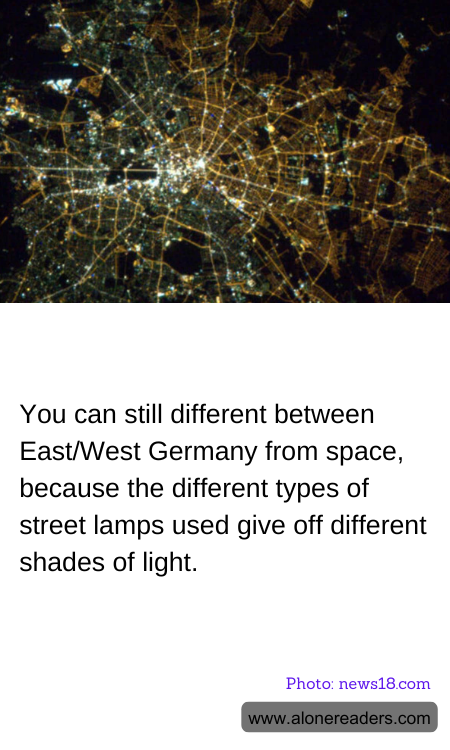
From the vast expanse of space, the Earth reveals its secrets in unexpected ways. One such revelation is the lingering distinction between East and West Germany, visible even decades after reunification. This distinction is not marked by borders or walls but by the subtle glow of streetlights that illuminate the night. The story of these lights is a fascinating intersection of history, technology, and the enduring legacy of a divided nation.
When Germany was split into East and West during the Cold War, each side developed independently, including their infrastructure and urban planning. This divergence extended to the types of street lighting used. In East Germany, the prevalent streetlights were sodium-vapor lamps, known for their warm, orange-yellow glow. These lamps were chosen for their efficiency and cost-effectiveness, aligning with the economic constraints and industrial priorities of the socialist state. Meanwhile, West Germany opted for mercury-vapor lamps, which emit a cooler, bluish-white light. These lamps were more expensive but provided better color rendering, reflecting the West's focus on technological advancement and aesthetic considerations.
Today, as satellites orbit the Earth, they capture images that reveal this historical divide. The contrasting hues of streetlights create a visible line across the landscape, a testament to the different paths taken by the two regions. This phenomenon is particularly striking in cities like Berlin, where the former boundary between East and West is still discernible from above. The orange glow of the east contrasts sharply with the white light of the west, painting a picture of a nation once divided.
The persistence of these differences is not merely a relic of the past but also a reflection of the challenges and complexities of reunification. While Germany has made significant strides in integrating its infrastructure, the process is ongoing. Replacing streetlights is a costly and time-consuming endeavor, and many municipalities have prioritized other pressing needs. As a result, the distinct lighting remains, a reminder of the historical and cultural forces that shaped modern Germany.
This phenomenon has captured the imagination of many, serving as a poignant reminder of the Cold War era and the resilience of human societies. It also highlights the power of technology to reveal hidden stories and connect us to our shared history. For those who gaze upon the Earth from space, the lights of Germany offer a unique perspective on the enduring impact of geopolitical events and the ways in which they continue to shape our world.
In a world where borders are increasingly blurred by globalization and technological advancement, the streetlights of Germany stand as a symbol of both division and unity. They remind us that while the past may cast long shadows, it also illuminates the path forward, guiding us toward a future where differences are celebrated and history is remembered.