More About This Card
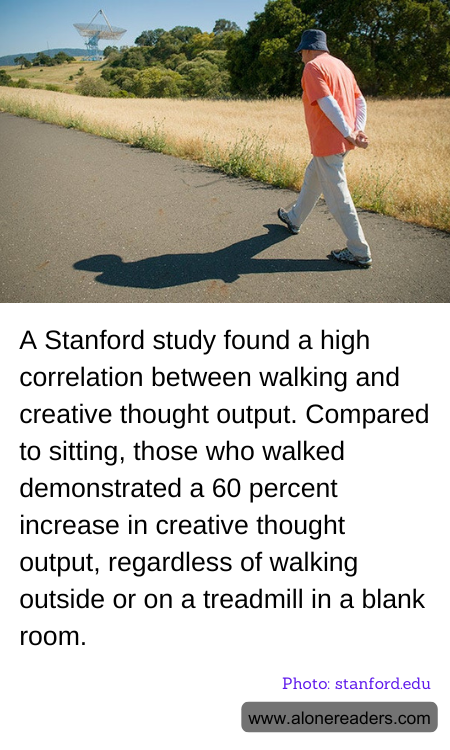
A recent study conducted by researchers at Stanford University has unveiled a fascinating link between walking and enhanced creative thinking. The study reveals that individuals who engage in walking, whether outdoors or on a treadmill in a nondescript room, experience a significant boost in creative thought output compared to those who remain seated. Specifically, the research highlights a remarkable 60 percent increase in creativity among walkers, suggesting that the simple act of moving one's feet can unlock the mind's creative potential.
The study's findings are particularly intriguing as they challenge the conventional notion that creativity thrives in environments rich with stimuli. Instead, the research suggests that the physical act of walking itself, rather than the surrounding environment, is the key driver of creative thought. Participants who walked on a treadmill in a blank room demonstrated creativity levels comparable to those who walked outside, indicating that the movement itself is the catalyst for creative thinking.
This discovery has significant implications for individuals seeking to enhance their creative output, whether in professional settings or personal endeavors. In an era where sedentary lifestyles are increasingly common, incorporating regular walking sessions into one's routine could serve as a simple yet effective strategy to stimulate creative thinking. The study encourages people to take breaks from their desks and engage in walking, even if it means pacing back and forth in a confined space, to tap into their creative reservoirs.
Moreover, the research underscores the importance of physical activity in cognitive processes, adding to the growing body of evidence that supports the myriad benefits of exercise for mental health and cognitive function. Walking, a low-impact and accessible form of exercise, emerges as a powerful tool not only for physical well-being but also for fostering innovation and problem-solving skills.
The implications of the Stanford study extend beyond individual creativity, offering insights for educational institutions, workplaces, and creative industries. Schools and companies might consider integrating walking sessions into their schedules to enhance learning and productivity. Creative professionals, from writers to designers, could benefit from incorporating walking into their brainstorming sessions, potentially leading to breakthroughs and novel ideas.
In conclusion, the Stanford study sheds light on the profound impact of walking on creative thought output, revealing a 60 percent increase in creativity compared to sitting. This research invites individuals of all ages to embrace walking as a means to unlock their creative potential, regardless of their environment. As we navigate an increasingly sedentary world, the simple act of walking offers a promising pathway to enhanced creativity and cognitive vitality.