More About This Card
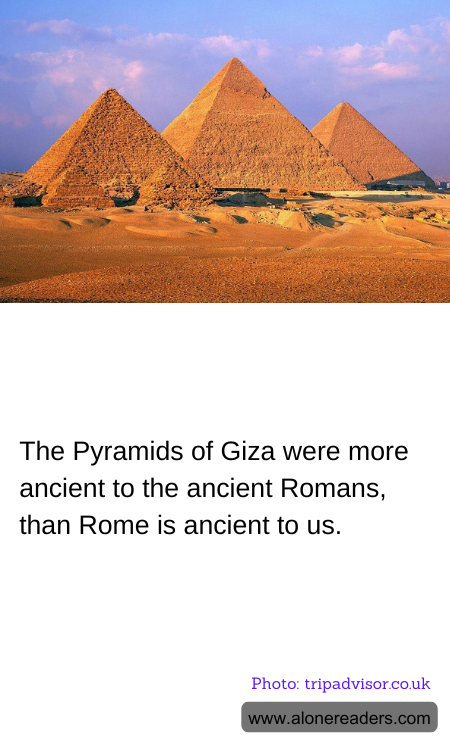
The Pyramids of Giza, standing majestically on the Giza Plateau in Egypt, are among the most iconic and enduring symbols of ancient human civilization. These monumental structures, built as tombs for the pharaohs of the Old Kingdom, have fascinated historians, archaeologists, and tourists alike for centuries. What is particularly intriguing about the Pyramids of Giza is their age, which places them in a unique historical context that often surprises many: they were more ancient to the ancient Romans than Rome is ancient to us today.
Constructed around 4,500 years ago, the Great Pyramid of Giza, also known as the Pyramid of Khufu, is the oldest of the Seven Wonders of the Ancient World and the only one still largely intact. To put this into perspective, when Julius Caesar arrived in Egypt in 48 BC, the pyramids were already over 2,400 years old. This means that the pyramids were as ancient to the Romans as the Roman Empire is to us now. The sheer antiquity of these structures underscores the remarkable achievements of the ancient Egyptians and their advanced understanding of engineering and architecture.
The Romans, known for their own architectural prowess, were undoubtedly awestruck by the pyramids. These structures were a testament to a civilization that had mastered the art of building on a scale that was unparalleled at the time. The Romans, who themselves contributed significantly to architectural innovations, such as the development of concrete and the arch, would have seen the pyramids as a link to a distant past, a marvel of human ingenuity that predated their own civilization by millennia.
This historical perspective highlights the continuity and progression of human achievement. The pyramids serve as a reminder of the enduring legacy of ancient civilizations and their contributions to the world. They also illustrate the passage of time and how our understanding of history is shaped by the artifacts and monuments left behind by previous generations. The fact that the pyramids were ancient even to the Romans adds a layer of depth to our appreciation of history, reminding us of the vast expanse of time that separates us from the builders of these monumental structures.
In today's world, the Pyramids of Giza continue to captivate the imagination of people from all walks of life. They are a symbol of the enduring human spirit and our quest to leave a mark on the world. As we stand in awe of these ancient wonders, we are reminded of the interconnectedness of human history and the shared legacy that binds us across the ages. The pyramids are not just relics of the past; they are a testament to the timeless nature of human creativity and ambition.