More About This Card
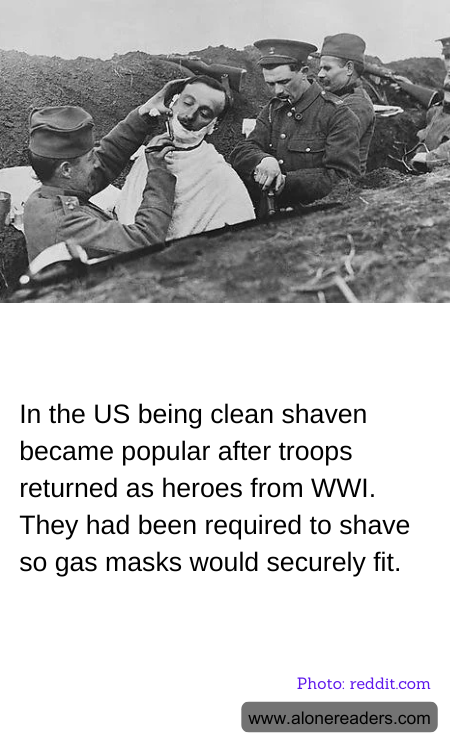
The clean-shaven look, now a staple of modern grooming, owes much of its popularity in the United States to the aftermath of World War I. Before the war, facial hair was a common sight among men, with mustaches, beards, and sideburns being symbols of masculinity and style. However, the return of American troops from the battlefields of Europe marked a significant shift in grooming trends, largely influenced by practical wartime necessities.
During World War I, soldiers were required to shave their faces to ensure a proper fit for gas masks. The masks were essential for survival in the trenches, where chemical warfare posed a constant threat. A clean-shaven face was crucial to create a tight seal around the mask, preventing deadly gases from seeping in. This requirement led to a widespread adoption of shaving among the troops, many of whom had never before considered removing their facial hair.
When these soldiers returned home, they brought with them not only tales of bravery and camaraderie but also a new grooming standard. The clean-shaven look became associated with the heroism and discipline of the returning veterans. As these men reintegrated into civilian life, their appearance set a new trend that quickly spread across the nation. The image of the clean-shaven war hero resonated with the public, and soon, it became a symbol of modernity and progress.
The influence of returning soldiers on grooming habits was further amplified by the burgeoning advertising industry. Companies like Gillette capitalized on this new trend, promoting razors and shaving products as essential tools for the modern man. Advertisements often depicted clean-shaven men as successful, attractive, and forward-thinking, further embedding the style into the cultural fabric of the time.
This shift in grooming preferences was not just a fleeting trend but a lasting change that reshaped societal norms. The clean-shaven look became synonymous with professionalism and respectability, influencing everything from workplace dress codes to social expectations. Over the decades, while facial hair has experienced various revivals, the clean-shaven aesthetic has remained a timeless standard, deeply rooted in the historical context of World War I.
Today, the legacy of those soldiers continues to influence grooming choices, with many men opting for a clean-shaven look as a nod to both practicality and style. The story of how this trend emerged serves as a reminder of how historical events can shape cultural practices in unexpected ways, leaving a lasting impact on everyday life.