More About This Card
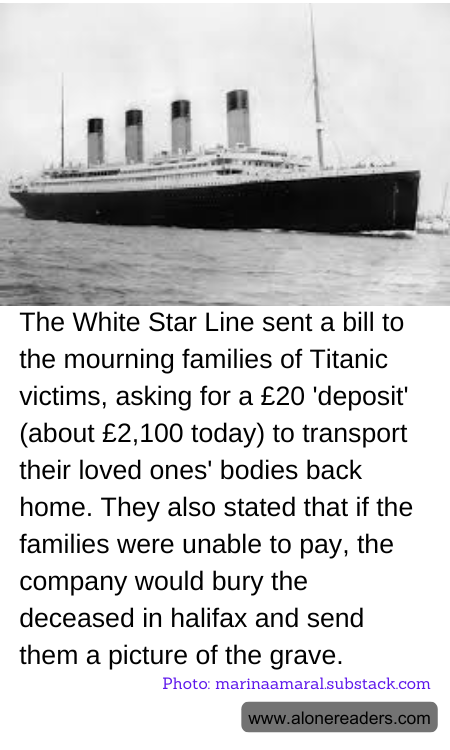
In the annals of maritime history, the sinking of the RMS Titanic remains one of the most tragic and poignant events. The ill-fated voyage of April 1912 not only claimed the lives of over 1,500 passengers and crew but also left a lasting impact on the families who lost their loved ones. In the aftermath of the disaster, the White Star Line, the company that owned the Titanic, faced significant criticism for its handling of the tragedy. Among the most controversial actions was the decision to send a bill to the grieving families of the victims, requesting a £20 deposit—equivalent to approximately £2,100 today—to transport the bodies of their loved ones back home.
The White Star Line's request for a deposit was a stark reminder of the harsh realities faced by the families during this period. For many, the loss of a family member on the Titanic was not only an emotional blow but also a financial one. The £20 fee was a considerable sum at the time, and for those who could not afford it, the company offered an alternative: the deceased would be buried in Halifax, Nova Scotia, and a photograph of the grave would be sent to the family. This proposition, while practical from a logistical standpoint, was seen by many as cold and insensitive, adding to the grief of those already mourning.
The decision to charge families for the repatriation of bodies was not entirely unprecedented, as it was common practice for shipping companies at the time to pass on such costs. However, the scale of the Titanic disaster and the public's emotional investment in the tragedy made this particular instance stand out. The White Star Line's approach was perceived as prioritizing financial considerations over compassion, leading to public outrage and further tarnishing the company's reputation.
In the broader context of the Titanic disaster, the issue of the £20 deposit highlights the complexities of dealing with large-scale tragedies. It underscores the challenges faced by companies in balancing operational realities with the need for empathy and sensitivity. The public backlash against the White Star Line's actions served as a catalyst for change, prompting discussions about the responsibilities of companies in times of crisis and the importance of compassionate corporate conduct.
Today, the story of the Titanic continues to resonate, serving as a poignant reminder of the human cost of technological ambition and the enduring need for empathy in the face of tragedy. The controversy surrounding the White Star Line's handling of the victims' remains is a testament to the enduring impact of the disaster on the collective consciousness and the lessons learned about compassion and corporate responsibility.