More About This Card
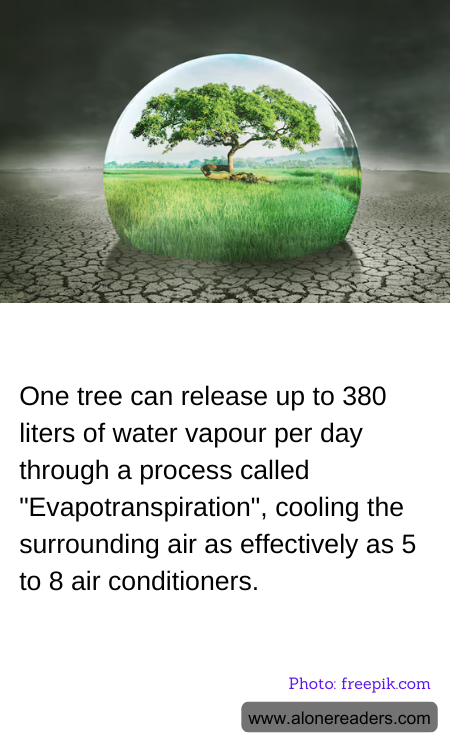
In the intricate dance of nature, trees play a pivotal role that extends far beyond their aesthetic appeal. One of the most fascinating aspects of trees is their ability to release significant amounts of water vapor into the atmosphere through a process known as evapotranspiration. This natural phenomenon not only contributes to the hydrological cycle but also has a profound impact on the microclimate, providing a cooling effect that rivals modern air conditioning systems.
Evapotranspiration is a combination of two processes: evaporation and transpiration. Evaporation occurs when water from the soil and other surfaces turns into vapor, while transpiration is the release of water vapor from the leaves of plants. Together, these processes enable a single tree to release up to 380 liters of water vapor into the air each day. This release of moisture is not just a passive occurrence; it actively cools the surrounding environment. As the water vapor evaporates, it absorbs heat from the air, effectively lowering the temperature in the vicinity of the tree.
The cooling effect of a tree through evapotranspiration is remarkably efficient. Studies have shown that a single tree can cool the air as effectively as five to eight air conditioners running for the same period. This natural air conditioning is not only energy-efficient but also environmentally friendly, as it does not rely on electricity or emit greenhouse gases. In urban areas, where heat islands are a common problem due to concrete and asphalt surfaces absorbing and retaining heat, the presence of trees can significantly mitigate temperature extremes, making cities more livable and reducing the need for artificial cooling.
Moreover, the benefits of trees extend beyond their cooling capabilities. They improve air quality by absorbing pollutants and releasing oxygen, provide habitats for wildlife, and enhance the overall aesthetic and psychological well-being of communities. The shade provided by trees also protects against harmful UV rays, making outdoor spaces more comfortable and safer for people to enjoy.
Incorporating more trees into urban planning and development is a sustainable strategy that can address multiple environmental challenges. As climate change continues to pose significant threats to global temperatures, the role of trees in natural cooling becomes increasingly vital. By understanding and leveraging the process of evapotranspiration, we can harness the power of trees to create healthier, more sustainable environments for future generations.
In conclusion, the humble tree, through the process of evapotranspiration, offers a natural solution to cooling our surroundings, akin to the operation of multiple air conditioners. This remarkable ability underscores the importance of preserving and planting trees, not only for their beauty and ecological benefits but also for their crucial role in maintaining a balanced and habitable climate. As we continue to seek sustainable solutions to environmental challenges, the value of trees in our ecosystems cannot be overstated.