More About This Card
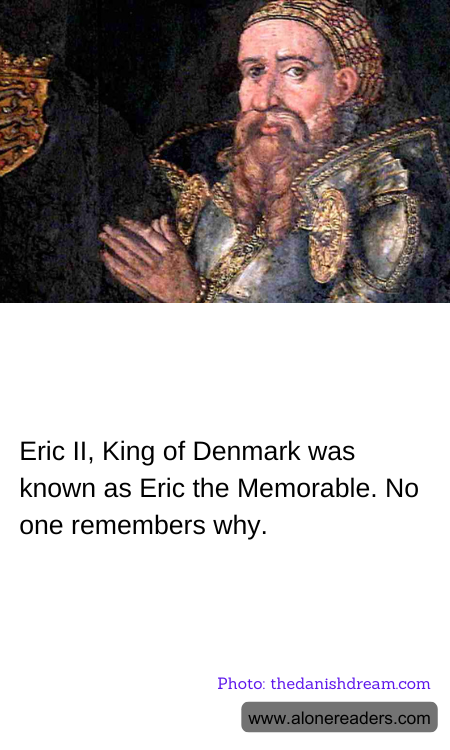
Eric II, King of Denmark, often referred to as Eric the Memorable, is a figure shrouded in historical ambiguity. Ascending to the throne in 1134, Eric's reign was marked by a series of events that, while significant at the time, have largely faded from collective memory. The moniker "the Memorable" suggests a legacy of notable deeds or characteristics, yet the specifics of what made him so memorable have been lost to the sands of time.
Eric's rule was during a turbulent period in Danish history, characterized by internal strife and external threats. He was a member of the Estridsen dynasty, a lineage that frequently found itself embroiled in power struggles. Eric's path to the throne was paved with conflict, as he was initially a contender in a civil war against his uncle, King Niels. The decisive Battle of Fotevik in 1134, where Eric emerged victorious, marked the beginning of his reign. This victory might have been one of the reasons for his memorable status, as it established his authority and ended a period of instability.
Despite the initial triumph, Eric's reign was not without its challenges. His time as king was marked by efforts to consolidate power and maintain control over a fragmented kingdom. He faced opposition from various factions within Denmark, as well as from neighboring regions. Eric's attempts to strengthen the monarchy and his involvement in ecclesiastical matters might have contributed to his memorable reputation, as he sought to balance secular and religious influences in his kingdom.
However, the details of Eric's achievements and failures have not been well-documented, leading to a historical conundrum. The lack of comprehensive records from the period means that much of what made Eric "the Memorable" has been obscured. Historians speculate that his epithet could have been attributed to his military prowess, his political maneuvers, or perhaps even his personal charisma. Yet, without concrete evidence, these remain educated guesses.
In the end, Eric II's legacy as "the Memorable" serves as a reminder of the complexities of historical memory. It highlights how the passage of time can obscure the details of even the most significant lives, leaving behind only fragments of a once vivid story. While the specifics of Eric's memorable deeds may be lost, his epithet continues to intrigue and invite speculation, ensuring that, in some way, he remains a part of Denmark's rich historical tapestry.