More About This Card
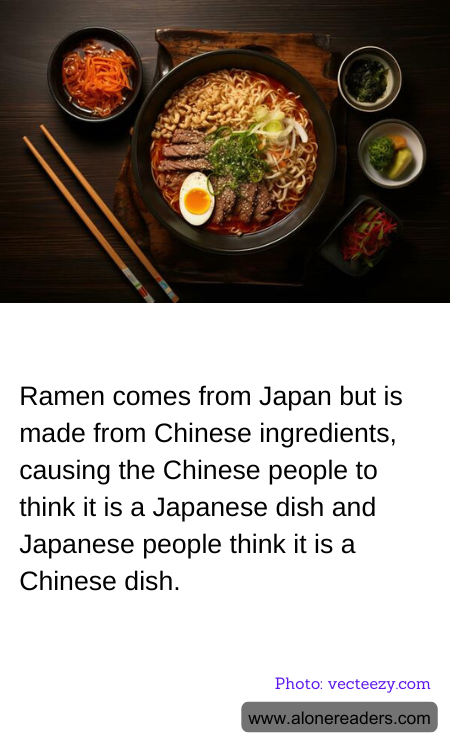
Ramen, a beloved dish that has captured the hearts and taste buds of people worldwide, is often at the center of a culinary identity debate. Originating from Japan, ramen is a noodle soup that has become synonymous with Japanese cuisine. However, its roots and ingredients tell a more complex story that intertwines the culinary traditions of both Japan and China, leading to a fascinating cultural exchange that sometimes leaves both Chinese and Japanese people wondering about its true origins.
The story of ramen begins in the late 19th to early 20th century, during a period when Japan was opening its doors to international influences. Chinese immigrants, particularly in port cities like Yokohama, introduced a simple noodle soup that would eventually evolve into what we now recognize as ramen. The original Chinese version, known as "lamian," consisted of hand-pulled noodles served in a savory broth, often accompanied by a variety of toppings. This dish was adapted by the Japanese, who infused it with local flavors and ingredients, creating a unique culinary hybrid.
The ingredients that make up ramen are predominantly Chinese in origin. The noodles themselves are made from wheat flour, a staple in Chinese cuisine, and the use of alkaline water, or "kansui," gives them their distinct texture and yellow hue. The broth, a crucial component of ramen, often includes soy sauce or miso, both of which have deep roots in Chinese culinary practices. Even the toppings, such as bamboo shoots and pork, reflect a Chinese influence.
Despite these Chinese elements, ramen has been embraced and transformed by Japanese culture. The Japanese have elevated ramen to an art form, with regional variations and specialized ramen shops dedicated to perfecting the dish. From the rich, creamy tonkotsu broth of Fukuoka to the soy-based shoyu ramen of Tokyo, each style showcases the creativity and adaptability of Japanese chefs. This evolution has cemented ramen's identity as a quintessential Japanese dish in the eyes of many around the world.
However, this cultural exchange has led to some confusion. In China, where the original concept of noodle soup began, many people view ramen as a Japanese creation due to its global association with Japanese cuisine. Conversely, in Japan, the Chinese origins of the dish are well-known, leading some to regard it as a foreign import that has been localized. This dual perception highlights the fluid nature of culinary traditions and the way they can transcend borders.
Ramen's journey from a simple Chinese noodle soup to a global Japanese phenomenon is a testament to the power of cultural exchange and adaptation. It serves as a delicious reminder that food is a universal language, capable of bridging cultures and creating shared experiences. Whether enjoyed in a bustling Tokyo ramen shop or a cozy Chinese eatery, ramen continues to be a beloved dish that celebrates the rich tapestry of Asian culinary heritage.