More About This Card
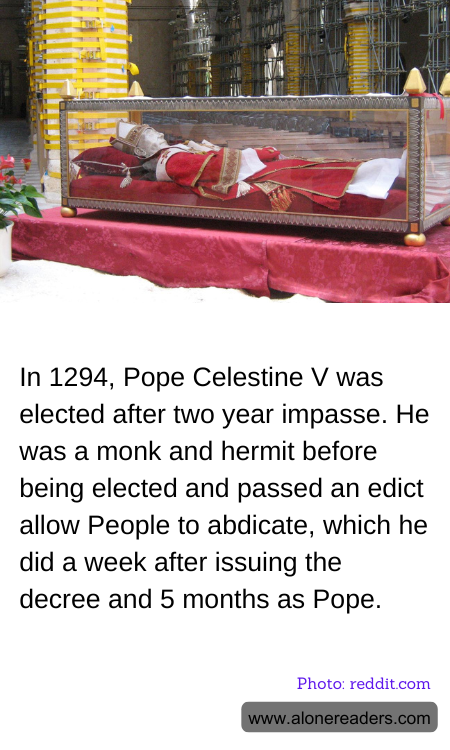
In the annals of papal history, few figures are as intriguing as Pope Celestine V, a man whose brief tenure as the head of the Catholic Church was marked by humility, simplicity, and a groundbreaking decision that would echo through the ages. Elected in 1294 after a two-year impasse, Celestine V's rise to the papacy was as unexpected as it was extraordinary.
Before his election, Celestine V was known as Pietro del Morrone, a monk and hermit who had dedicated his life to solitude and prayer. His reputation for piety and asceticism was well-known, and it was this reputation that led the College of Cardinals to turn to him in a moment of desperation. The Church had been without a pope for two years, a period marked by political maneuvering and deadlock. In a bid to break the stalemate, the cardinals chose Pietro, hoping his spiritual integrity would restore faith in the papacy.
Celestine V's papacy was characterized by his desire to return the Church to its spiritual roots. However, his lack of political acumen and administrative experience soon became apparent. The complexities of running the Church and navigating the political landscape of the time proved overwhelming for the humble hermit. Recognizing his limitations, Celestine V made a decision that was as bold as it was unprecedented: he issued an edict allowing popes to abdicate.
This decree was a radical departure from tradition, as the papacy was generally considered a lifelong commitment. Yet, Celestine V's humility and self-awareness led him to conclude that the Church would be better served by a more capable leader. Just a week after issuing the decree, he exercised this newfound right, abdicating the papacy after only five months in office.
Celestine V's abdication was met with mixed reactions. Some viewed it as an act of cowardice, while others saw it as a testament to his humility and wisdom. Regardless of opinion, his decision set a precedent that would not be followed again until Pope Benedict XVI's resignation in 2013.
After stepping down, Celestine V returned to his life of contemplation and prayer, but his story did not end there. His successor, Pope Boniface VIII, fearing that Celestine might become a focal point for opposition, had him imprisoned. Celestine V spent the remainder of his days in captivity, passing away in 1296. He was later canonized as a saint, his life and papacy remembered for their simplicity and sincerity.
Pope Celestine V's brief papacy serves as a poignant reminder of the power of humility and the courage it takes to recognize one's limitations. His legacy endures as a symbol of the enduring struggle between spiritual ideals and the practical demands of leadership.