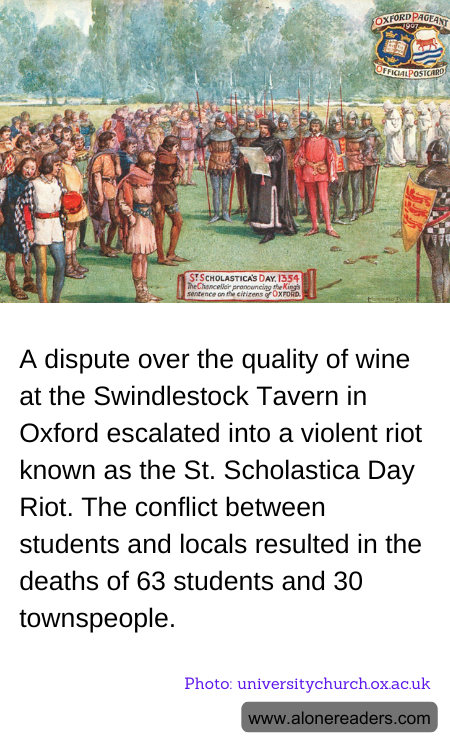
More About This Card
In the annals of history, the St. Scholastica Day Riot stands as a stark reminder of the tensions that can arise between academic institutions and their surrounding communities. This infamous event, which unfolded on February 10, 1355, in Oxford, England, was triggered by a seemingly trivial dispute over the quality of wine served at the Swindlestock Tavern. However, the repercussions were anything but trivial, resulting in a violent conflict that claimed the lives of 63 students and 30 townspeople.
The origins of the riot can be traced back to a group of Oxford University students who were dissatisfied with the wine they were served at the tavern. Their complaints quickly escalated into a heated argument with the tavern's landlord. What began as a minor disagreement soon spiraled out of control, drawing in more students and local townspeople. The situation rapidly deteriorated into a full-scale riot, fueled by longstanding animosities between the university and the town.
At the heart of the conflict was a deep-seated resentment harbored by the townspeople towards the university. Oxford University, established in the 12th century, had grown in prestige and influence, often at the expense of the local community. The students, who enjoyed certain privileges and protections, were frequently viewed as arrogant and dismissive of the townspeople. This simmering tension was exacerbated by economic disparities and social divisions, creating a volatile environment ripe for conflict.
As the riot unfolded, both sides armed themselves with makeshift weapons, and the violence spread throughout the town. The chaos lasted for several days, with neither the university authorities nor the local officials able to restore order. The aftermath was devastating, with significant loss of life and property damage. The riot left a lasting scar on the relationship between the university and the town, highlighting the need for reconciliation and mutual understanding.
In the wake of the violence, King Edward III intervened, imposing heavy fines on the town and granting the university greater autonomy and privileges. This intervention, while intended to restore peace, further entrenched the divide between the university and the local community. It took centuries for the wounds of the St. Scholastica Day Riot to heal, with both sides gradually working towards a more harmonious coexistence.
Today, the St. Scholastica Day Riot serves as a historical lesson on the dangers of unchecked tensions and the importance of dialogue and cooperation. It reminds us that even the most prestigious institutions must remain mindful of their impact on the communities they inhabit. As Oxford continues to thrive as a center of learning, the legacy of the riot underscores the enduring need for empathy and understanding between students and townspeople, ensuring that such a tragedy is never repeated.