More About This Card
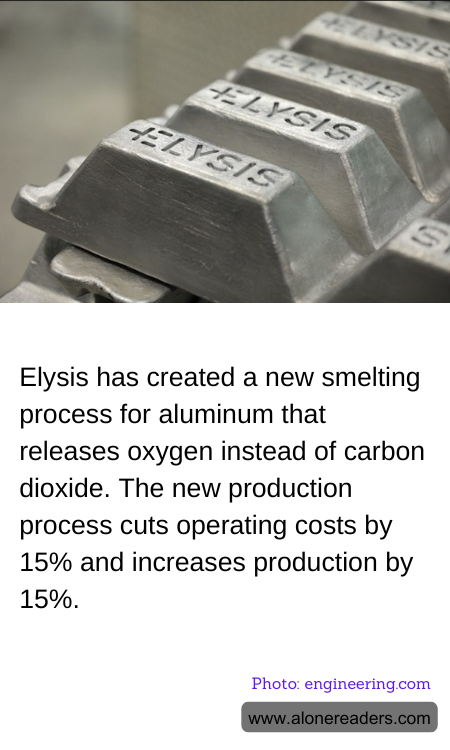
In a groundbreaking development for the aluminum industry, Elysis has introduced a revolutionary smelting process that promises to transform the way aluminum is produced. Traditionally, aluminum smelting has been associated with significant carbon dioxide emissions, contributing to environmental concerns and climate change. However, Elysis has pioneered a new method that not only eliminates these emissions but also releases oxygen as a byproduct, marking a significant step forward in sustainable industrial practices.
The innovative process developed by Elysis replaces the carbon anodes used in traditional smelting with inert anodes. This change is pivotal as it eliminates the carbon dioxide emissions typically generated during the smelting process. Instead, the new method produces oxygen, offering a cleaner and more environmentally friendly alternative. This advancement aligns with global efforts to reduce carbon footprints and combat climate change, making it a highly significant development in the realm of industrial manufacturing.
Beyond its environmental benefits, the Elysis smelting process also offers substantial economic advantages. By cutting operating costs by 15%, the new method provides a more cost-effective solution for aluminum producers. This reduction in costs is achieved through increased efficiency and the elimination of expenses associated with managing carbon emissions. Furthermore, the process enhances production capacity by 15%, allowing manufacturers to produce more aluminum without the need for additional resources or infrastructure. This increase in production efficiency is a boon for the industry, potentially leading to lower prices for consumers and increased competitiveness in the global market.
The introduction of this new smelting process is timely, as industries worldwide are under increasing pressure to adopt more sustainable practices. Aluminum is a critical material used in various sectors, including automotive, aerospace, and construction. The ability to produce it in a more environmentally friendly manner could have far-reaching implications, encouraging other industries to follow suit and innovate towards sustainability.
Elysis's breakthrough is not just a technological advancement; it represents a paradigm shift in how industries approach production and environmental responsibility. By demonstrating that it is possible to increase efficiency and reduce costs while also minimizing environmental impact, Elysis sets a new standard for industrial innovation. As the world continues to grapple with the challenges of climate change, such advancements are crucial in paving the way for a more sustainable future.
In conclusion, Elysis's new smelting process for aluminum is a remarkable achievement that addresses both environmental and economic challenges. By eliminating carbon dioxide emissions and releasing oxygen instead, the process offers a cleaner, more efficient, and cost-effective solution for aluminum production. This innovation not only benefits the aluminum industry but also serves as an inspiring example of how technology can drive positive change in the pursuit of sustainability. As industries continue to evolve, the Elysis process stands as a beacon of progress, demonstrating that it is possible to achieve economic growth while safeguarding the planet for future generations.