More About This Card
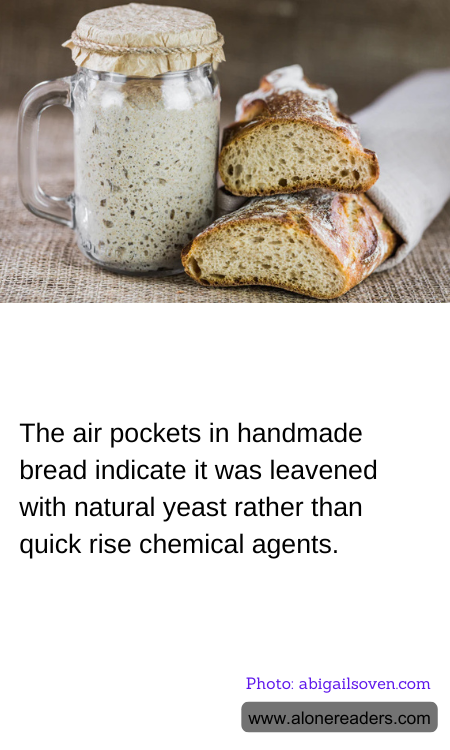
In the world of artisanal baking, the presence of air pockets in handmade bread is a hallmark of quality and tradition. These irregular holes, varying in size and distribution, are not merely aesthetic features but are indicative of a bread-making process that relies on natural yeast rather than quick-rise chemical agents. Understanding the significance of these air pockets can deepen our appreciation for the craft of bread-making and the subtle science behind it.
Natural yeast, often referred to as wild yeast, is a living organism that is cultivated over time in a sourdough starter. This starter is a mixture of flour and water that captures yeast and bacteria from the environment, allowing them to ferment and grow. The fermentation process is slow and meticulous, often taking several hours or even days, but it is this patience that yields bread with a complex flavor profile and a unique texture. The air pockets in the bread are a direct result of this fermentation process, as the yeast consumes sugars in the flour and releases carbon dioxide gas, which gets trapped in the dough, creating those characteristic bubbles.
In contrast, bread made with quick-rise chemical agents, such as commercial yeast or baking powder, tends to have a more uniform texture with smaller, more evenly distributed air pockets. These agents are designed to expedite the rising process, allowing bread to be made in a fraction of the time. While this method is convenient and efficient, it often sacrifices the depth of flavor and the rustic appearance that many bread enthusiasts cherish. The uniformity of the air pockets in chemically leavened bread is a telltale sign of its rapid production, lacking the artisanal touch that comes from natural fermentation.
The choice between natural yeast and chemical leavening agents is not merely a matter of tradition versus modernity; it is a decision that impacts the sensory experience of eating bread. Bread leavened with natural yeast often has a tangy flavor and a chewy texture, qualities that are highly prized by connoisseurs. The irregular air pockets contribute to a crust that is both crisp and tender, enhancing the overall enjoyment of each bite. Moreover, the slow fermentation process can also improve the nutritional profile of the bread, as it breaks down gluten and makes certain nutrients more bioavailable.
For those who appreciate the artistry of baking, the air pockets in handmade bread are a testament to the skill and dedication of the baker. They reflect a commitment to time-honored techniques and a respect for the natural processes that have been used for centuries. Whether enjoyed fresh from the oven or toasted with a pat of butter, bread leavened with natural yeast offers a sensory experience that is both satisfying and enriching. As more people seek to reconnect with traditional food practices, the allure of naturally leavened bread continues to grow, inviting us all to savor the simple pleasures of a well-crafted loaf.