More About This Card
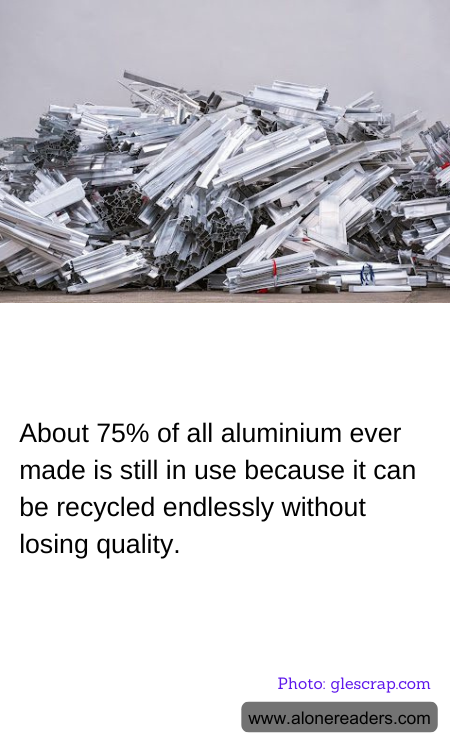
Aluminium is a remarkable metal that has become an integral part of our daily lives, from the cars we drive to the packaging that preserves our food. One of the most fascinating aspects of aluminium is its recyclability. Approximately 75% of all aluminium ever produced is still in use today, a testament to its ability to be recycled endlessly without losing its quality. This characteristic not only highlights aluminium's durability but also underscores its environmental benefits.
The process of recycling aluminium is both efficient and effective. Unlike many other materials, aluminium can be recycled repeatedly without degrading its properties. This means that the same piece of aluminium can be reused in various forms, from beverage cans to airplane parts, without any loss in performance or quality. The recycling process involves melting down the aluminium scrap, which requires only about 5% of the energy needed to produce new aluminium from raw ore. This significant energy saving translates into reduced greenhouse gas emissions, making aluminium recycling a key component in efforts to combat climate change.
The widespread use of recycled aluminium is not only an environmental boon but also an economic one. The recycling industry provides jobs and supports local economies while reducing the need for mining and refining new aluminium, which can be both costly and environmentally damaging. By keeping aluminium in circulation, we reduce the demand for new raw materials and lessen the environmental impact associated with mining activities. This closed-loop system of recycling helps conserve natural resources and promotes sustainable development.
Moreover, the versatility of aluminium makes it a preferred choice in various industries. Its lightweight nature, combined with its strength and resistance to corrosion, makes it ideal for use in transportation, construction, and packaging. The automotive industry, for example, benefits greatly from aluminium's properties, as it helps in manufacturing lighter vehicles that consume less fuel and emit fewer pollutants. Similarly, in the construction sector, aluminium's durability and aesthetic appeal make it a popular material for building facades and window frames.
Public awareness and participation in recycling programs are crucial to maintaining the high rate of aluminium recycling. Many communities have established systems to collect and process aluminium waste, ensuring that it is returned to the production cycle rather than ending up in landfills. By participating in these programs, individuals can contribute to a more sustainable future, where resources are used responsibly and efficiently.
In conclusion, the fact that about 75% of all aluminium ever made is still in use is a powerful reminder of the metal's enduring value and sustainability. Its ability to be recycled endlessly without losing quality makes it a cornerstone of modern environmental efforts. As we continue to seek ways to reduce our ecological footprint, aluminium recycling stands out as a shining example of how innovation and responsibility can work hand in hand to create a more sustainable world.