More About This Card
Nestled within the heart of Japan, the Japanese Alps are a breathtaking expanse of rugged mountains and serene landscapes. This region is not only a haven for nature enthusiasts and adventure seekers but also home to one of the most fascinating wildlife spectacles on the planet: the snow monkeys, or Japanese macaques. These remarkable creatures have adapted to the harsh winters of the Japanese Alps in a way that captivates both scientists and tourists alike.
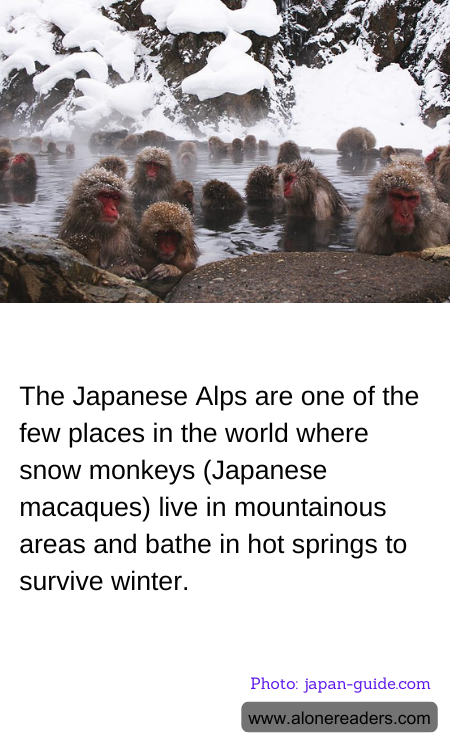
Japanese macaques are the northernmost-living non-human primates, and their ability to thrive in the cold, snowy environment of the Japanese Alps is a testament to their resilience and adaptability. As temperatures plummet and snow blankets the landscape, these intelligent primates have discovered a unique survival strategy—bathing in the natural hot springs that dot the region. This behavior is not only a means of keeping warm but also a social activity that strengthens bonds within their troops.
The hot springs, or "onsen," are a natural feature of the volcanic activity in the area, and they provide a warm refuge for the macaques during the frigid winter months. Observing these monkeys as they soak in the steaming waters, their faces often dusted with snow, is a sight that draws visitors from around the world. The most famous location to witness this phenomenon is the Jigokudani Monkey Park in Nagano Prefecture, where the macaques have become accustomed to human presence, allowing for close-up observation and photography.
Beyond their charming appearance, the snow monkeys' use of hot springs is a fascinating example of animal behavior and adaptation. Studies have shown that this behavior not only helps them maintain body temperature but also reduces stress levels, much like how humans experience relaxation in a warm bath. The macaques' ability to learn and pass down this behavior through generations highlights their intelligence and social complexity.
The presence of snow monkeys in the Japanese Alps also underscores the importance of preserving natural habitats. As human activities and climate change continue to impact ecosystems worldwide, the conservation of these unique environments is crucial for the survival of species like the Japanese macaque. Efforts to protect the natural beauty and biodiversity of the Japanese Alps ensure that future generations can continue to marvel at the sight of snow monkeys enjoying their winter baths.
In conclusion, the Japanese Alps offer a rare glimpse into the lives of snow monkeys, showcasing their remarkable adaptation to one of the world's most challenging climates. Their endearing habit of bathing in hot springs not only provides warmth and comfort but also serves as a reminder of the intricate connections between wildlife and their habitats. For those fortunate enough to witness this natural wonder, the experience is both enchanting and enlightening, leaving a lasting impression of the resilience and beauty of nature.