More About This Card
In the annals of ancient history, the construction of the Egyptian pyramids stands as a testament to human ingenuity and endurance. These monumental structures, built thousands of years ago, continue to captivate the imagination of people worldwide. While much attention is often given to the architectural prowess and the pharaohs who commissioned these grand edifices, the laborers who toiled tirelessly to bring these visions to life played an equally crucial role. Among the various strategies employed to enhance their productivity and strength, the use of garlic as a dietary supplement stands out as a fascinating example of ancient nutritional wisdom.
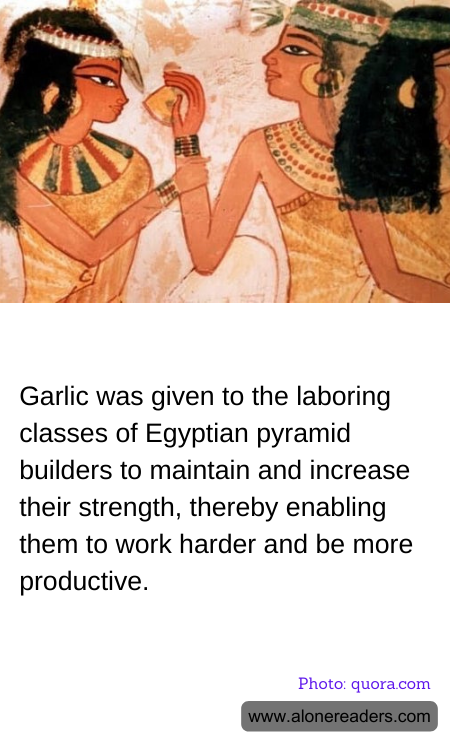
Garlic, a humble bulbous plant, was highly valued in ancient Egypt not only for its culinary uses but also for its medicinal properties. The laboring classes, particularly those involved in the grueling task of pyramid construction, were provided with garlic as part of their daily rations. This practice was rooted in the belief that garlic could significantly boost physical strength and stamina, enabling workers to endure the harsh conditions and demanding workload.
The reasoning behind this ancient practice is supported by modern science, which has revealed that garlic contains compounds such as allicin, known for its health benefits. Allicin is released when garlic is crushed or chopped, and it has been shown to have anti-inflammatory and antioxidant properties. These attributes could have contributed to improved physical performance and quicker recovery from the physical exertion experienced by the pyramid builders.
Moreover, garlic was believed to have protective qualities, warding off illnesses and infections that could easily spread among the laborers living in close quarters. In an era long before the advent of modern medicine, maintaining the health of the workforce was paramount to the successful completion of such massive construction projects. By incorporating garlic into their diet, the Egyptians were not only enhancing the workers' physical capabilities but also safeguarding their overall well-being.
The use of garlic by the pyramid builders is a testament to the Egyptians' understanding of the relationship between nutrition and productivity. It highlights the importance of dietary choices in supporting physical labor and maintaining health, a concept that remains relevant today. While the methods and materials have evolved over the millennia, the fundamental principle of using food as a means to enhance human performance continues to be a cornerstone of nutritional science.
In conclusion, the incorporation of garlic into the diet of Egyptian pyramid builders underscores the foresight and resourcefulness of ancient civilizations. It serves as a reminder of the timeless connection between nutrition and human capability, illustrating how even the simplest of foods can play a pivotal role in achieving monumental feats. As we marvel at the pyramids today, we can also appreciate the wisdom of those who recognized the power of garlic in fueling the strength and resilience of the laborers who built them.