More About This Card
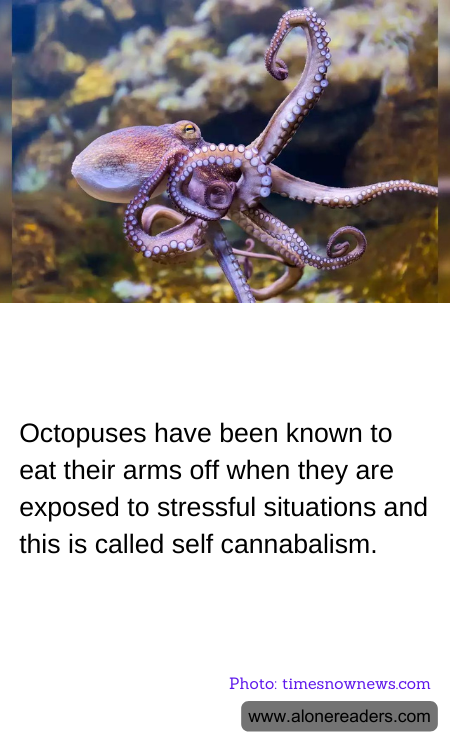
Octopuses are fascinating creatures that inhabit the depths of our oceans, known for their intelligence, problem-solving abilities, and unique physical characteristics. However, one of the more perplexing behaviors observed in these cephalopods is their tendency to engage in self-cannibalism, particularly under stressful conditions. This behavior, where an octopus may eat its own arms, is a subject of intrigue and concern among marine biologists and animal behaviorists.
The phenomenon of self-cannibalism in octopuses is not entirely understood, but it is believed to be a response to extreme stress or adverse environmental conditions. Stressors can include changes in water temperature, pollution, captivity, or a lack of food. In the wild, octopuses are solitary creatures that thrive in stable environments. When these conditions are disrupted, their stress levels can rise significantly, leading to this drastic behavior.
One theory suggests that self-cannibalism may be a misguided attempt at self-preservation. In the absence of food, an octopus might resort to consuming its own limbs as a last-ditch effort to survive. However, this behavior is counterproductive, as losing limbs can severely impact their ability to hunt, defend themselves, and navigate their surroundings. Moreover, the act of eating their own arms can lead to infections and further health complications, ultimately reducing their chances of survival.
Another perspective considers the neurological and psychological aspects of this behavior. Octopuses possess a complex nervous system and a high degree of intelligence, which can make them more susceptible to stress-related disorders. In captivity, where they are often deprived of the mental stimulation and environmental enrichment they would find in the wild, octopuses may experience heightened stress and anxiety. This can manifest in self-destructive behaviors, including self-cannibalism.
Efforts to prevent self-cannibalism in octopuses, particularly those in captivity, focus on improving their living conditions. Providing a more natural and enriched environment, with opportunities for exploration and problem-solving, can help reduce stress levels. Ensuring a stable and clean habitat, along with a consistent and appropriate diet, is also crucial in mitigating this behavior.
Understanding the reasons behind self-cannibalism in octopuses is essential not only for the welfare of these remarkable creatures but also for gaining insights into the broader implications of stress on animal behavior. As we continue to study and learn from these intelligent beings, it becomes increasingly clear that their well-being is intricately linked to the health of our oceans. By addressing the environmental challenges that contribute to stress in marine life, we can help preserve the delicate balance of our underwater ecosystems and ensure the survival of species like the octopus for generations to come.