More About This Card
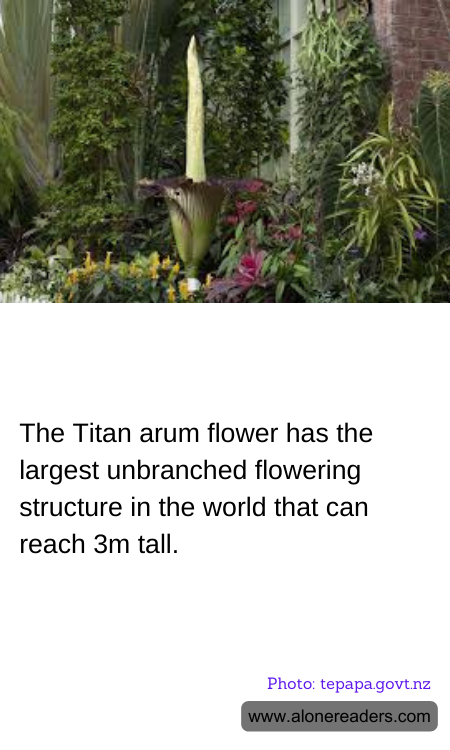
In the lush rainforests of Sumatra, Indonesia, a botanical marvel known as the Titan arum, or Amorphophallus titanum, stands as a testament to the wonders of nature. This extraordinary plant boasts the largest unbranched flowering structure in the world, capable of reaching an impressive height of up to three meters. Often referred to as the "corpse flower" due to its distinctive odor, the Titan arum captivates botanists and nature enthusiasts alike with its remarkable size and unique characteristics.
The Titan arum's flowering process is a rare and spectacular event, occurring infrequently and lasting only a few days. When the plant is ready to bloom, it unfurls a massive, petal-like structure called a spathe, which surrounds a towering central spike known as a spadix. The spadix can grow up to three meters tall, making it the largest unbranched inflorescence in the plant kingdom. This impressive display is not only a visual spectacle but also a strategic adaptation for attracting pollinators.
The plant's infamous odor, reminiscent of rotting flesh, plays a crucial role in its reproductive strategy. The pungent smell is designed to mimic the scent of decaying organic matter, attracting carrion beetles and flesh flies that are drawn to such odors. These insects become unwitting pollinators as they crawl over the spadix in search of a meal, inadvertently transferring pollen from one flower to another. This clever mimicry ensures the continuation of the Titan arum's life cycle, despite its infrequent blooming.
The Titan arum's life cycle is as fascinating as its bloom. After the flowering period, the plant enters a dormant phase, during which the spadix and spathe wither away. The plant then focuses its energy on developing a large underground tuber, which can weigh over 100 kilograms. This tuber stores nutrients that will fuel the next flowering cycle, which may not occur for several years. During this time, the plant may produce a single, large leaf that resembles a small tree, allowing it to photosynthesize and gather energy.
Cultivating the Titan arum outside its native habitat presents significant challenges due to its specific environmental requirements. However, botanical gardens around the world have successfully grown and displayed this remarkable plant, offering visitors a rare glimpse of its awe-inspiring bloom. When a Titan arum is set to flower, it often becomes a major attraction, drawing crowds eager to witness the fleeting beauty and peculiar aroma of this natural wonder.
The Titan arum stands as a symbol of the incredible diversity and complexity of the plant kingdom. Its towering presence and unique adaptations highlight the intricate relationships between plants and their pollinators, as well as the delicate balance of ecosystems. For those fortunate enough to witness its bloom, the Titan arum offers a profound reminder of the marvels that nature has to offer, inspiring curiosity and appreciation for the world around us.