More About This Card
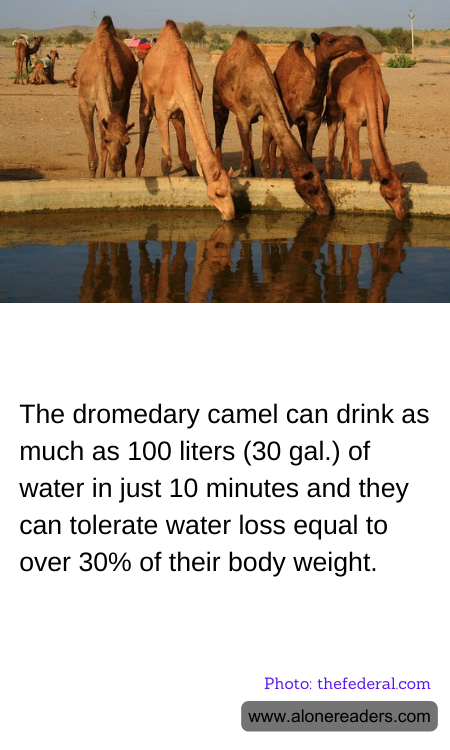
The dromedary camel, often referred to as the "ship of the desert," is a remarkable creature uniquely adapted to survive in some of the harshest environments on Earth. One of its most astonishing abilities is its capacity to drink an extraordinary amount of water in a very short period. A dromedary camel can consume up to 100 liters (approximately 30 gallons) of water in just 10 minutes. This incredible feat is not just a testament to its survival skills but also a fascinating aspect of its biology.
The ability to drink such a large volume of water quickly is crucial for the camel's survival in arid regions where water sources are scarce and sporadic. When a camel encounters water, it must take advantage of the opportunity to hydrate, as it may be days or even weeks before it finds another source. This rapid intake of water is facilitated by the camel's unique physiological adaptations. Its red blood cells are oval-shaped, allowing them to flow more easily when the blood thickens due to dehydration. This shape also helps the cells to expand and hold more water, preventing the camel from suffering the effects of dehydration as quickly as other animals might.
In addition to their impressive drinking capabilities, dromedary camels can tolerate a significant loss of body water. Unlike most mammals, which can only withstand a water loss of about 15% of their body weight before experiencing severe health issues, camels can endure a water loss of over 30%. This tolerance is another key adaptation that allows them to thrive in desert climates. The camel's body can withstand such dehydration without the severe consequences that would befall other animals, such as organ failure or death. This resilience is partly due to their ability to maintain blood pressure and circulation even when dehydrated, ensuring that vital organs continue to function.
The camel's ability to manage water so efficiently is not just limited to its drinking habits. Its entire body is designed to conserve water. Camels have thick fur that insulates them from the intense heat of the sun, reducing the need for sweating, which would otherwise lead to water loss. Their nostrils can close to prevent sand from entering and to reduce water loss through respiration. Furthermore, camels produce highly concentrated urine and dry feces, minimizing water loss through excretion.
These extraordinary adaptations make the dromedary camel a symbol of endurance and survival. Their ability to thrive in environments that would be inhospitable to most other animals is a testament to the wonders of evolution and nature's ingenuity. For centuries, camels have been indispensable to the people of desert regions, providing transportation, milk, and meat. Their remarkable water management skills continue to fascinate scientists and nature enthusiasts alike, highlighting the incredible ways in which life can adapt to even the most challenging conditions.