More About This Card
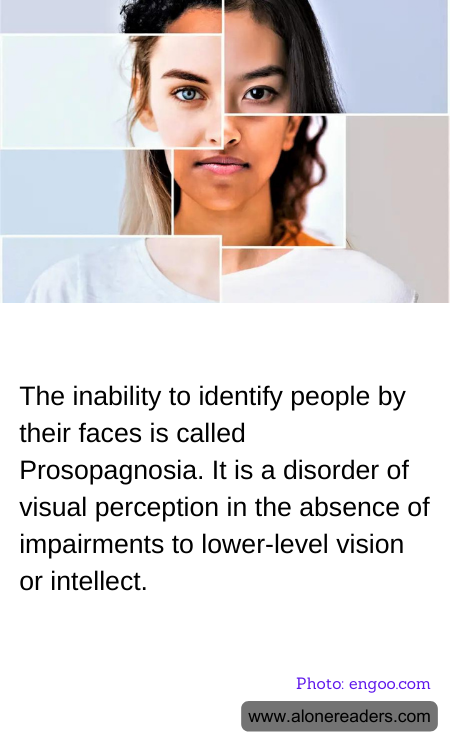
Prosopagnosia, often referred to as face blindness, is a fascinating yet challenging disorder that affects an individual's ability to recognize faces. This condition is a specific type of visual perception disorder, occurring despite the absence of impairments to lower-level vision or intellect. People with prosopagnosia can see and describe facial features, but they struggle to identify or remember faces, even those of close family members or friends.
The disorder can be congenital, meaning it is present from birth, or it can be acquired due to brain injury or neurological conditions. In congenital cases, the exact cause is not well understood, but it is believed to have a genetic component. Acquired prosopagnosia, on the other hand, often results from damage to the fusiform gyrus, a part of the brain that plays a critical role in facial recognition.
Living with prosopagnosia can be challenging. Individuals with this condition often rely on alternative strategies to recognize people, such as focusing on distinctive features like hairstyles, clothing, or voice. This reliance on non-facial cues can be cumbersome and may lead to social anxiety or embarrassment, especially in situations where these cues are not available or have changed.
Despite its challenges, awareness and understanding of prosopagnosia are growing. Researchers are actively studying the condition to better understand its underlying mechanisms and to develop effective coping strategies. Some individuals with prosopagnosia have found success with technological aids, such as smartphone apps that help identify people by analyzing facial features and providing cues.
For those living with prosopagnosia, support from friends, family, and colleagues is crucial. Simple accommodations, like introducing oneself in social settings or wearing name tags, can make a significant difference. Educating others about the condition can also foster a more inclusive and understanding environment.
In conclusion, prosopagnosia is a unique disorder that highlights the complexity of human perception and the brain's role in processing visual information. While it presents significant challenges, increased awareness and research are paving the way for better support and solutions for those affected. Understanding and empathy from society can help individuals with prosopagnosia navigate their world with greater ease and confidence.