More About This Card
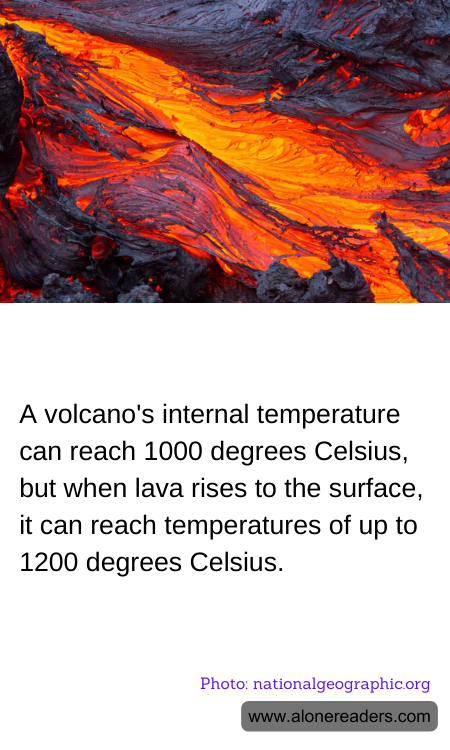
Volcanoes are among the most fascinating and powerful natural phenomena on Earth. They are not only a testament to the dynamic nature of our planet but also a source of awe and wonder for scientists and laypeople alike. One of the most intriguing aspects of volcanoes is their ability to generate and expel molten rock, known as lava, at incredibly high temperatures. Inside a volcano, the temperature can reach up to 1000 degrees Celsius, but as the lava makes its way to the surface, it can become even hotter, reaching temperatures of up to 1200 degrees Celsius.
The journey of lava from the depths of the Earth to the surface is a complex process. Deep within the Earth, the intense heat and pressure cause rocks to melt, forming magma. This magma is stored in a magma chamber beneath the volcano. The temperature within this chamber is typically around 1000 degrees Celsius, a temperature high enough to keep the rocks in a molten state. However, as the magma rises through the volcanic conduit towards the surface, it undergoes changes that can increase its temperature.
One reason for the increase in temperature as lava approaches the surface is the reduction in pressure. Deep underground, the immense pressure helps keep the magma in a semi-solid state. As it rises and the pressure decreases, the magma can expand and become more fluid, allowing it to reach higher temperatures. Additionally, the composition of the magma can affect its temperature. Magma rich in certain gases or with a higher concentration of certain minerals can reach higher temperatures as it erupts.
When lava finally emerges from a volcano, it can be a spectacular sight. The bright, glowing liquid rock can flow rapidly down the volcano's slopes, creating rivers of fire that reshape the landscape. The temperature of this lava, often reaching up to 1200 degrees Celsius, is hot enough to incinerate almost anything in its path. Despite its destructive power, lava flows are also a source of new land formation, as they cool and solidify to create new rock formations.
Understanding the temperatures involved in volcanic activity is crucial for scientists who study these natural wonders. By monitoring the temperature and composition of magma, researchers can gain insights into the behavior of volcanoes and potentially predict eruptions. This knowledge is vital for the safety of communities living near active volcanoes, as it can help mitigate the risks associated with volcanic eruptions.
Volcanoes remind us of the Earth's incredible power and the dynamic processes that shape our planet. The extreme temperatures involved in volcanic activity are a testament to the intense forces at work beneath our feet. As we continue to study and learn from these natural phenomena, we gain a deeper appreciation for the complexity and beauty of our world.