More About This Card
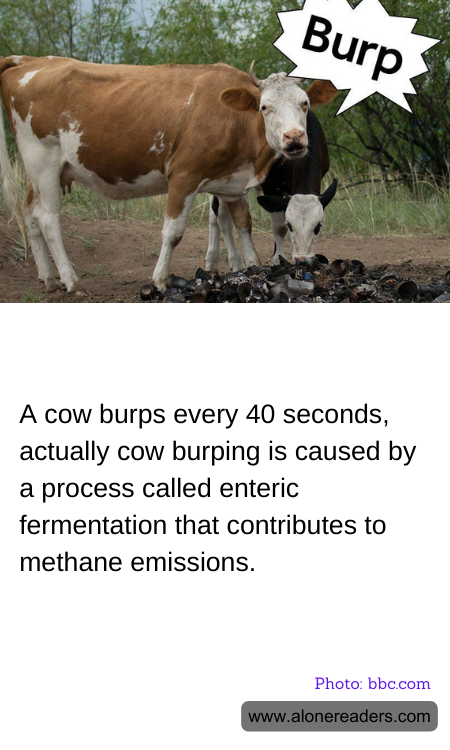
Cows are often seen as gentle giants grazing peacefully in fields, but these seemingly innocuous animals play a surprisingly significant role in the conversation about climate change. Every 40 seconds, a cow burps, releasing methane into the atmosphere. This might sound like a trivial fact, but it is a key component of a larger environmental issue. The process behind these burps is known as enteric fermentation, a natural digestive process that occurs in the stomachs of ruminant animals like cows, sheep, and goats.
Enteric fermentation is a complex process where microbes in the stomach break down food, particularly fibrous plant material, to aid in digestion. This microbial activity produces methane as a byproduct, which the animal then expels primarily through burping. Methane is a potent greenhouse gas, with a global warming potential many times greater than that of carbon dioxide over a 20-year period. As a result, the methane emissions from livestock are a significant contributor to global greenhouse gas emissions, accounting for about 14.5% of human-induced emissions according to the Food and Agriculture Organization of the United Nations.
The scale of this issue is amplified by the sheer number of cattle worldwide, with over a billion cows contributing to methane emissions. This has led scientists and environmentalists to explore various strategies to mitigate the impact of livestock on climate change. Some approaches include altering cattle diets to reduce methane production, breeding cattle that naturally produce less methane, and even developing feed additives that inhibit the microbes responsible for methane production.
Efforts to reduce methane emissions from cattle are not only about protecting the environment but also about improving agricultural efficiency. Methane production represents a loss of energy that could otherwise be used for growth and milk production. By reducing methane emissions, farmers can potentially improve the productivity of their livestock while also contributing to global sustainability goals.
Public awareness and understanding of the issue are crucial for driving change. As consumers become more informed about the environmental impact of livestock, there is a growing demand for sustainable farming practices and products. This shift in consumer behavior can encourage the agricultural industry to adopt more eco-friendly practices, ultimately leading to a reduction in methane emissions from cattle.
In conclusion, while a cow's burp might seem like a small and harmless act, it is part of a larger environmental challenge that requires attention and action. By understanding the science behind enteric fermentation and its impact on methane emissions, we can take steps towards a more sustainable future. Whether through scientific innovation, changes in agricultural practices, or informed consumer choices, there are numerous pathways to address this issue and reduce the environmental footprint of livestock.