More About This Card
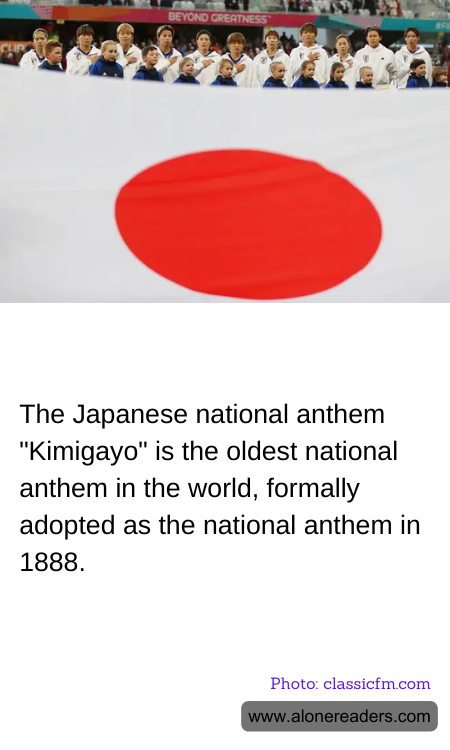
The Japanese national anthem, "Kimigayo," holds the distinguished title of being the oldest national anthem in the world. Its formal adoption as Japan's national anthem in 1888 marked a significant moment in the country's history, intertwining cultural heritage with national identity. The anthem's origins, however, trace back much further, rooted deeply in Japan's rich historical tapestry.
"Kimigayo" is unique not only for its age but also for its brevity and poetic depth. The lyrics are derived from a waka poem, a traditional Japanese form of poetry, which dates back to the Heian period (794-1185). This poem was originally found in the "Kokin Wakashu," an ancient anthology of Japanese poetry compiled in the early 10th century. The words of "Kimigayo" express a wish for the longevity and prosperity of the emperor's reign, symbolizing the enduring stability and continuity of the nation.
The melody that accompanies the lyrics was composed in the late 19th century, during a time when Japan was undergoing significant modernization and Westernization. The music was created by a British military band instructor, John William Fenton, who was tasked with developing a national anthem that would resonate with both Japanese tradition and the Western musical influences of the era. The final arrangement, which is still used today, was completed by Japanese composer Hiromori Hayashi and Franz Eckert, a German musician. This collaboration resulted in a harmonious blend of Eastern and Western musical elements, reflecting Japan's unique position as a bridge between two worlds.
Despite its historical significance, "Kimigayo" has not been without controversy. The anthem's association with Japan's imperial past and militaristic history has sparked debate, particularly in the post-World War II era. Some view it as a symbol of nationalism and militarism, while others see it as a cherished part of Japan's cultural heritage. In recent years, efforts have been made to promote a more inclusive understanding of the anthem, emphasizing its role in celebrating national unity and cultural identity.
Today, "Kimigayo" is performed at various national events, including school ceremonies, sports competitions, and official state functions. Its haunting melody and profound lyrics continue to evoke a sense of pride and reflection among the Japanese people. As the oldest national anthem in the world, "Kimigayo" stands as a testament to Japan's enduring cultural legacy and its ability to adapt and thrive amidst the changing tides of history.