More About This Card
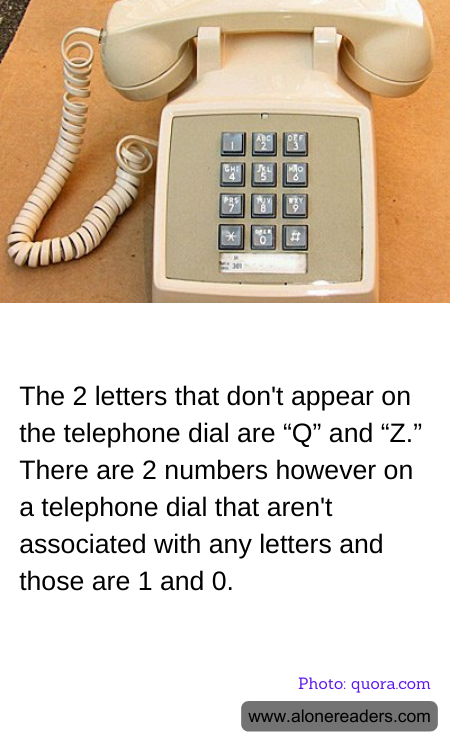
In the age of smartphones, where touchscreens and digital interfaces dominate, the traditional telephone dial might seem like a relic of the past. However, understanding its design offers a fascinating glimpse into the history of telecommunications. One intriguing aspect of the classic rotary dial or push-button telephone is its unique relationship with the alphabet and numbers. Notably, the letters "Q" and "Z" are conspicuously absent from the telephone dial, and the numbers 1 and 0 are not associated with any letters.
The absence of "Q" and "Z" on the telephone dial can be traced back to the early days of telephone technology. When the telephone dial system was developed, it was designed to accommodate a limited number of characters. The dial had to be both functional and easy to use, which led to the exclusion of certain letters. The letters were distributed across the numbers 2 through 9, with each number representing a set of three or four letters. For instance, the number 2 corresponded to the letters A, B, and C, while the number 3 represented D, E, and F, and so on. To maintain a balanced distribution and simplify the design, "Q" and "Z" were omitted, as they were less frequently used in the English language.
The numbers 1 and 0, on the other hand, were not associated with any letters. This design choice was intentional and served a practical purpose. The number 1 was often reserved for special functions, such as accessing operator assistance or initiating certain service features. Similarly, the number 0 was typically used for dialing the operator directly. By not associating these numbers with any letters, the telephone system avoided potential confusion and ensured that these important functions remained distinct and easily accessible.
While the absence of "Q" and "Z" and the unique role of 1 and 0 might seem like minor details, they highlight the thoughtful design considerations that went into creating a user-friendly telephone system. These decisions were made to enhance efficiency and usability, ensuring that users could quickly and accurately dial numbers without unnecessary complexity.
Today, as we navigate the digital age, the legacy of the traditional telephone dial continues to influence modern communication devices. Although we may no longer rely on rotary dials, the principles of simplicity and functionality remain at the core of technological design. Understanding the history and rationale behind the telephone dial not only enriches our appreciation for past innovations but also underscores the importance of thoughtful design in shaping our everyday experiences.