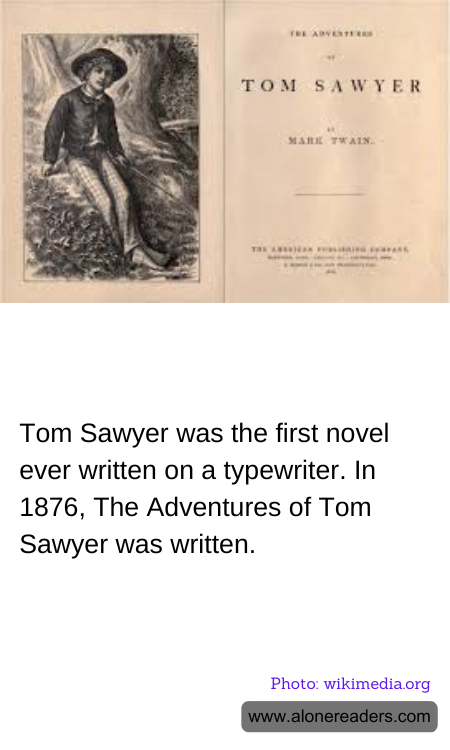
More About This Card
In the annals of literary history, few novels hold as unique a place as "The Adventures of Tom Sawyer" by Mark Twain. Published in 1876, this beloved tale of youthful adventure and mischief is not only a cornerstone of American literature but also holds the distinction of being the first novel ever written on a typewriter. This fascinating fact adds an intriguing layer to the story of Tom Sawyer, a character who has captured the imaginations of readers for generations.
The typewriter, a revolutionary invention at the time, was a symbol of technological progress and innovation. It marked a significant departure from the traditional methods of writing, which involved pen and paper. The use of a typewriter allowed for a more efficient and legible means of producing text, which was particularly beneficial for authors like Twain, who were prolific in their output. The transition to typing was a bold move, reflecting Twain's forward-thinking nature and his willingness to embrace new technologies.
Mark Twain, whose real name was Samuel Langhorne Clemens, was known for his wit and keen observation of human nature. "The Adventures of Tom Sawyer" is a testament to his storytelling prowess, capturing the essence of boyhood in the 19th century with humor and insight. The novel follows the escapades of Tom Sawyer, a mischievous and adventurous boy living in the fictional town of St. Petersburg, Missouri. Through Tom's eyes, readers experience a world of treasure hunts, river adventures, and the timeless struggle between childhood innocence and the responsibilities of growing up.
The use of a typewriter in crafting this novel not only underscores Twain's innovative spirit but also highlights the intersection of technology and creativity. The typewriter allowed Twain to produce a clean, organized manuscript, which was crucial for the publishing process. This technological advancement likely contributed to the novel's success, as it facilitated a smoother transition from manuscript to print.
"The Adventures of Tom Sawyer" remains a beloved classic, cherished by readers of all ages. Its themes of friendship, adventure, and the quest for freedom resonate with audiences worldwide. The fact that it was the first novel written on a typewriter adds an extra layer of historical significance, reminding us of the ever-evolving relationship between literature and technology.
In today's digital age, where typing is ubiquitous, it's easy to overlook the impact of the typewriter on the literary world. However, Twain's pioneering use of this device paved the way for future authors, demonstrating how technology can enhance the creative process. As we continue to explore new frontiers in writing and publishing, the story of Tom Sawyer and his typewritten adventures serves as a reminder of the enduring power of innovation in the world of literature.